
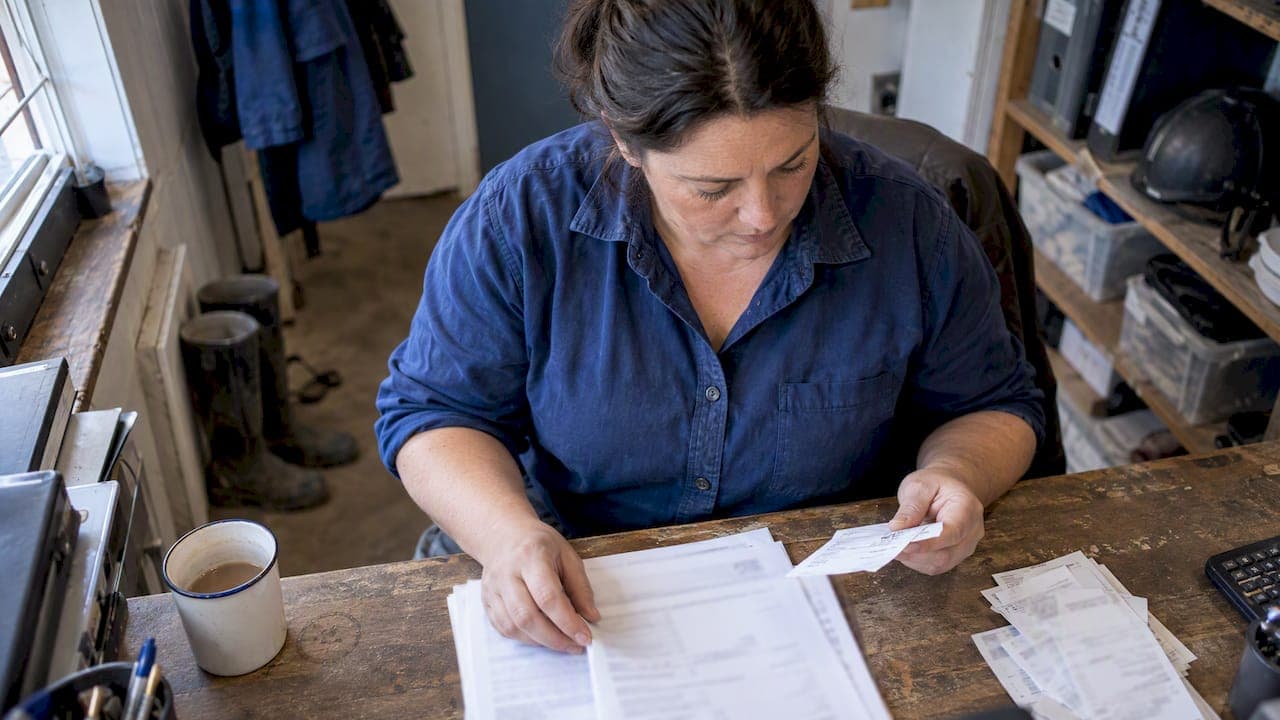
An expense audit for a stable is a monthly check that every dollar spent and every dollar billed matches a record of what actually happened in the yard. You pull the feed, vet, farrier and wage costs, tie each one to a receipt and a horse, and look for anything that is missing, doubled, personal or unbilled. Done monthly, it takes a few hours. Done once a year in a panic before tax time, it takes days and still misses things.
This guide sets out the routine we recommend for professional yards, syndicates and trainers in Australia: what to check, in what order, who should do it, and what to keep.
TL;DR
- Audit monthly, not annually. Reconcile your bank and card statements against feed deliveries, vet and farrier visit records and your owner invoices.
- The costliest gap is usually between work done and work billed. Check every logged service against an invoice line before you send the invoice.
- Keep business spending in a dedicated account, with a note on every payment, so personal and yard costs never blur.
- Separate duties: the person who handles cash or payments should not also be the person who updates the books.
- Keep business records for at least five years, and ask your accountant what else applies to your structure.
Table of Contents
- What an expense audit means on a yard
- Set up the categories before you audit anything
- The monthly audit, step by step
- Controls that stop errors and fraud
- What the tax office expects you to keep
- When to hand it to an accountant
- Our perspective: audit the process, not just the receipts
- Making the audit easier with one workspace
- A first-month plan
- FAQ
- Sources
What an expense audit means on a yard
In a corporate setting, "audit" suggests an outside firm and a formal report. On a stable it is much more practical. It is a systematic check that what you paid and what you charged are both accurate and supported by evidence. Industry guidance on boarding operations describes a monthly reconciliation of income and expenses against daily logs, farrier and vet visit records and payment processor reports as good practice, and that is a sensible rhythm for most yards. Treat that as a practice norm, not a legal requirement.
Three questions sit behind every audit:
- Is it real? Does each expense have a receipt, invoice or delivery docket?
- Is it in the right place? Is it coded to the right category, the right horse and the right owner, and is it a business cost rather than a personal one?
- Is it complete? Has everything the yard did for a horse made it onto an invoice, and has every supplier bill made it into your records?
The first two are about costs. The third is about revenue, and it is where many yards quietly lose money.
Set up the categories before you audit anything
You cannot audit a pile of undifferentiated transactions. Start with a chart of accounts that matches how a yard actually spends. An equine-specific chart is designed to tell the story of the business over its lifetime, and accountants who work in the industry suggest reviewing it regularly for chances to automate.
For most professional yards the main categories are:
- Feed, forage and bedding
- Veterinary and medical treatment
- Farrier and other hoof care
- Training, coaching and rider fees
- Facility maintenance, utilities and rent or agistment
- Equipment, tack and vehicle costs
- Wages, contractors and insurance
- Supplements and nutrition
These match the types of expense that agricultural record-keeping guidance flags as needing careful categorising, because correct coding is what separates business operations from personal family spending, a red flag in any tax review. If you want a deeper breakdown, our stable budget playbook on 10 expense categories walks through each one.
The monthly audit, step by step
Block out the same slot each month, ideally in the first week after month end, when statements are available and memories are fresh.
Step 1: Reconcile the bank and card statements
List every transaction from the business account and any cards. Tick each one against a receipt or invoice. Flag three things: payments with no paperwork, paperwork with no payment, and amounts that differ from the invoice.
This is also where a dedicated business account earns its keep. Record-keeping advisers strongly recommend a separate business bank account and a description on every payment. That description works as a small audit trail that can save hours, and accountant fees, at tax time. If feed or vet bills have been paid from a personal account, move to a business account now and document the past payments while you still remember them.
Step 2: Match supplier bills to what actually arrived
Check feed and hay invoices against delivery dockets and stock counts. Check vet invoices against the treatment records for each horse. Check farrier invoices against the shoeing or trimming schedule. Look for duplicates, price changes you did not agree to and items charged to the wrong horse.

A vet bill for a treatment that is not in the horse's medical record is worth a phone call. Keeping treatments in one place makes this far easier, which is why we wrote a guide to equine medical records management for vets and yards.
Step 3: Check logs against invoices before billing
This is the step most yards skip. The biggest financial risk is often a log-to-invoice gap: a service was performed, such as a feed adjustment, a supplement or a vet visit, but it never reached the billing system before the invoice went out. The standard remedy is an audit trail in which every service log entry is verified against a matching invoice line before you finalise the bill.
A simple version:
- Export or list every logged extra for the month: rugging changes, extra feeds, supplements, vet attendance, transport, lunging, schooling rides.
- Tick each against the owner's draft invoice.
- Add anything missing, or make a conscious decision to waive it and record why.
If you want to see how transparent invoices should look to owners, our piece on the eight invoice line items owners expect is a good template.
Step 4: Code costs to horses and owners
Every cost should end up attached to a horse. Shared costs, like hay for the whole barn, need a stated allocation rule, for example per head per day. Costs that belong to one owner, like a vet call or a new rug, should be recharged. We lay out a tight process for this in the 72-hour tag-to-ledger chargeback workflow.
Once costs are tied to horses, you can see what each horse really costs against what it earns. Our guide to per-horse P&L and stable expense tracking and the article on per-horse cost tracking and break-even show how.
Step 5: Review the exceptions and write them down
An audit is only useful if it leaves a trace. Keep a one-page note each month: what you checked, what you found, what you fixed, and what you will change. Over a year, the patterns become obvious. Maybe one supplier repeatedly over-delivers, or one type of extra is never billed.
Controls that stop errors and fraud

Audits catch problems after the fact. Controls prevent them. Two matter most on a yard.
Separate duties. Veterinary-practice consultants who review end-of-day procedures say that the person who counts cash, prepares the deposit and updates the accounting software should not be the same person. That separation is the single most effective control against both honest mistakes and internal fraud, in their view. A small yard with few staff can still apply it: the person who orders feed does not approve the invoice, or the person who takes lesson cash does not reconcile the bank.
Approval thresholds. Decide a dollar amount above which a second person signs off. Even a simple rule, such as "anything over $500 needs the manager's approval", forces a second look at the big spends.
Cash discipline. Cash from lessons, hay sales or visitors should be counted, recorded and banked on a schedule, with a receipt for every payment.
Asset tracking. Trailers, tractors and other equipment are expenses that leak when they go missing or sit idle. Telematics can help log use, and small equipment GPS trackers are one way to keep tabs on trailers and machinery between jobs. Whatever you use, the usage records feed back into your cost allocation.
What the tax office expects you to keep
This section is general information for Australian yards, not tax advice. Your accountant should confirm what applies to your structure.
The Australian Taxation Office says business records must be kept for at least five years. The records need enough detail for the ATO to understand the basic purpose of each transaction. An invoice, a bank line and a note on what it was for should cover most items.
If your yard runs at a loss, the rules for non-commercial losses can matter. The ATO explains that individuals with losses from non-commercial business activities may be required to defer those losses, and that primary production businesses have their own conditions. Whether your yard is a business for tax purposes depends on your circumstances, so take that question to a registered tax agent or accountant who knows the horse industry. Clean, categorised records make that conversation quicker and cheaper.
For professional riders and trainers, deductible items often include agent commissions, travel and safety equipment. Rules differ by country and by individual, so confirm each with your own adviser rather than assuming a list found online applies to you.
When to hand it to an accountant
Yard managers are often surprised by the cost of trying to run clinical or training duties and complex bookkeeping together. Veterinary business experts note that a professional accountant or fractional controller who understands horse-industry terminology can be more cost-effective than the owner's time, and can bring audit-readiness and compliance oversight. A sensible split is for the yard to do the monthly operational audit described above and for the accountant to handle BAS, tax returns and the annual review. Send them tidy, categorised data and their hours go on advice rather than sorting.
Our perspective: audit the process, not just the receipts
We build software for professional yards, and the pattern we see is consistent. Yards do not usually have a spending problem. They have a capture problem. A vet visit, a supplement change or a rug swap happens in the yard on Tuesday, is remembered on Friday and billed, if at all, at month end.
That is why we think the best audit is the one you rarely need to do. If every cost and service is logged at the moment it happens, tagged to a horse and visible to the team, the monthly audit becomes a quick confirmation instead of a forensic exercise. Offline access matters here: a yard with patchy signal in the paddocks or at the back of the barn will otherwise rely on memory.
We also believe owners should see what you see. Real-time updates and clear invoice lines remove most disputes before they begin, and syndicates in particular benefit from transparent financial oversight. And we are cautious about claims: software can organise and surface your data, but it does not replace an accountant's judgement on tax.
— isaac
Making the audit easier with one workspace
If your records are spread across a spreadsheet, a notebook, a messaging group and a shoebox of receipts, every audit starts with a hunt. EquiBETS Complete brings horse records, finance tracking, owner portals, team coordination and stable chat into one workspace, with an offline-first mobile app. It is a single plan at 9.99 AUD per month, with all features included and a free trial before you subscribe. You can also read how offline horse management software cuts owner calls, or see how cash flow planning for stables fits with the audit routine.
A first-month plan
If you have never audited your yard's spending, do not try to fix everything at once.
- Week 1: Open a dedicated business account if you do not have one, and agree your categories.
- Week 2: Reconcile last month's statements to receipts and flag gaps.
- Week 3: Compare last month's logged extras with invoices sent.
- Week 4: Write your one-page note, set approval thresholds and split duties. If you want a quick sense of how your yard compares, start with a week of horse data for benchmarking.
By the second month you will know your common errors. By the third, they will mostly be gone.
FAQ
How do you audit expenses?
Match every expense to a receipt, invoice or delivery record, then check it is coded to the right category, horse and owner. Next, check that every service performed has been billed. Do this monthly and keep a short note of what you found.
What is the purpose of an expense audit?
It confirms your financial records are accurate, shows which costs are genuinely business costs, and reveals revenue you failed to bill. It also leaves you with records that are ready for your accountant or the tax office.
How long should a stable keep its financial records?
The ATO says business records must be kept for at least five years. Some records, such as those for assets or carried-forward losses, may need to be kept longer, so check with your accountant.
Do small yards need to separate duties?
Yes, in a modified form. With a small team, you can still make sure the person who pays or handles cash is not the one who reconciles the accounts. Even the owner reviewing a bank statement each month adds a useful check.
Sources
- Keeping Records, The Horse
- An inside job, Today's Veterinary Business
- Equine Accounting and Business Consulting, Dean Dorton
- Keeping business records, Australian Taxation Office
- Primary production losses, Australian Taxation Office