
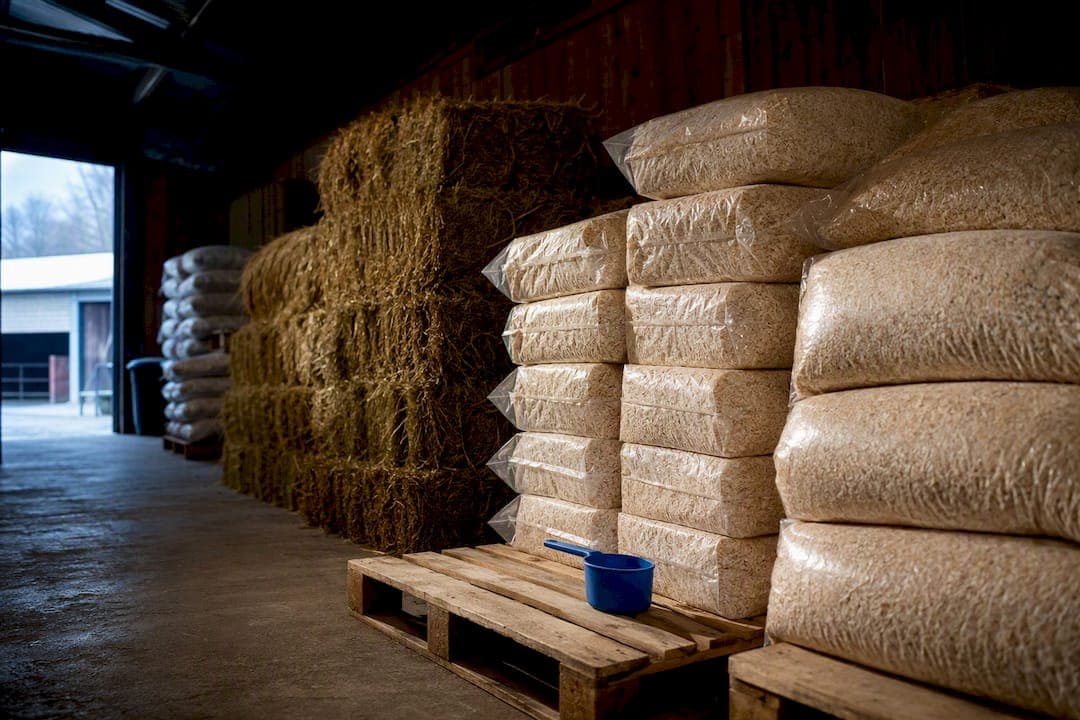
Ten categories cover almost every dollar a stable spends: feed and supplements, bedding, veterinary care, farrier services, labour, utilities, facility repairs, insurance, rent or loan repayments, and admin. Split every cost into capital (one off build or equipment) or operating (recurring monthly spend), then start a monthly profit and loss review today. The single fastest fix for a messy budget is deleting the "Other" category, and forcing every transaction into a named line.
TL;DR:
- Separating fixed and variable costs reveals how many stalls need full occupancy to break even and highlights the impact of empty stalls on profit.
- Immediate expense logging with detailed categories and regular monthly reviews prevent small leaks from escalating into major budget issues.
- Categorizing capital versus operating costs accurately supports better tax deductions, depreciation calculations, and internal financial clarity.
- Upfront site preparation, permits, and build-quality choices significantly influence initial costs and ongoing maintenance savings.
- Using specialized management software centralizes expense data, automates reporting, and streamlines owner billing for more accurate financial tracking.
Table of Contents
- What goes into each stable expense category
- Capital build costs versus everyday operating costs
- Working out your break-even cost per horse
- Building a monthly budgeting routine that actually works
- How software turns categories into a working system
- Tax deductions and reporting obligations for stable expenses
- What actually trips up stable budgets
- A simpler way to keep your categories honest
- Templates and guides worth bookmarking
- Sources
What goes into each stable expense category
Feed and supplements sit at the top of most budgets because they never stop moving. Hay and hard feed swing with the season, grass availability, and delivery contracts, so bulk pricing from a single supplier usually beats ad hoc purchases from three different feed stores. Bedding follows a similar pattern: straw, shavings, or paper pellets each carry different usage rates, and disposal costs (skip hire, muck heap removal) belong in this category too, not buried under general waste.
Veterinary spending has four distinct tiers worth tracking separately: routine check-ups, vaccinations, dentistry, and emergencies. Lumping them together hides whether you're spending too much on preventable issues or genuinely unlucky with colic call-outs. Farrier costs vary by discipline. A spelling paddock horse might need a trim every eight weeks; a competition jumper on shoes could need attention every four.
Labour is where most small operators quietly lose money, because owner time doesn't get costed as a business expense when the owner is also the one mucking out. Utilities cover water (horses drink a surprising amount, and wash bays add more), electricity for lighting and equipment, and fuel for machinery. Facility repairs and maintenance catch fencing, arena surfaces, manure management systems, and machinery upkeep.
Insurance needs its own line, split into public liability and care, custody or control cover, and admin absorbs software subscriptions, phone, and bookkeeping fees.
- Feed and supplements
- Bedding
- Veterinary (routine, vaccinations, dentistry, emergencies)
- Farrier
- Labour
- Utilities
- Facility repairs and maintenance
- Insurance
- Rent or loan repayments
- Admin and subscriptions
Capital build costs versus everyday operating costs
Building a stable and running one are two different financial problems, and mixing them up is how new operators underprice their board fees. Capital costs are the one off spend: land, the building shell, stall fit-out, and major equipment like tractors or arena groomers. Operating costs are what keeps the lights on every month once the build is finished.
Site work often gets underestimated. Drainage, access roads, permits, and connecting power or water can add real money before a single stall goes up, and per-stall delivered costs plus siteworks, storage, and lighting extras shift depending on the materials and layout you choose. A concrete floor with good drainage costs more upfront than compacted earth, but it cuts cleaning time and bedding use for years afterward. Insulated roofing costs more than bare steel but lowers heating and ventilation running costs in cold climates.
- Land and site preparation
- Building shell and stall fit-out
- Permits, drainage, access roads
- Major equipment (tractors, groomers, generators)
Pro Tip: Amortise your capital spend over its useful life (say, 15 years for a steel structure) and add that monthly figure into your operating budget as a "capital reserve" line. It stops a fresh building from looking artificially cheap to run in year one.
Working out your break-even cost per horse
Fixed costs stay the same whether you're stabling five horses or fifteen: rent or loan repayments, insurance premiums, and a base level of utilities. Variable costs move with horse numbers: feed, bedding, farrier, and most veterinary spend scale directly with how many animals are on the property.
- Add up all fixed monthly costs (rent, insurance, base utilities, admin).
- Divide that total by the number of stalls you're budgeting to fill, giving a fixed cost per stall.
- Add the variable cost per horse (feed, bedding, routine vet, farrier) to that fixed figure.
- The result is your true monthly cost per horse, before any margin.
A yard with notable monthly fixed costs divided by its number of stalls carries a fixed cost per stall before a single bag of feed gets bought. Separating fixed from variable costs this way shows exactly how many stalls need to be full before the business breaks even, and it exposes how brutally a thin-margin boarding operation reacts to even one or two empty stalls.
Building a monthly budgeting routine that actually works
Record every expense at the point of purchase, tagged to its category, with the receipt attached immediately rather than filed away for "later." Later rarely comes, and that's how three months of feed invoices end up unsorted in a shoebox.
Run a short checklist every month: review the profit and loss statement, compare each category against the prior month and the same month last year, and flag anything that's jumped more than 15 to 20%. Granular categorisation and a genuine monthly review is what stops small cost leaks from becoming a full blown budget blowout six months later.
- Log expenses immediately, tagged by category
- Review the P&L monthly, not quarterly
- Set a spike alert threshold (15 to 20% above trend)
- Keep a rolling 12 month cash-flow forecast for seasonal swings
Pro Tip: Build a separate reserve line for insurance renewals and major equipment replacement. Annual premiums and a $12,000 tractor repair land hardest when you haven't set money aside monthly to cover them.
Beyond the monthly cycle, keep a rolling 12 month cash-flow view so winter feed spikes and summer farrier surges don't blindside you, and set aside a reserve specifically for insurance renewals and capital replacements rather than treating them as surprises.
How software turns categories into a working system
A stable that tracks expenses on paper or scattered spreadsheets tends to lose the thread the moment a busy foaling season hits. A specialised horse management platform centralises invoices, owner billing, and recurring charges into consistent categories from the first entry, so nothing lands in a vague "miscellaneous" bucket by default. That structure feeds directly into automated monthly reports and per-horse cost breakdowns, which is the same maths described in the break-even section above, just generated automatically instead of built by hand in a spreadsheet.
Offline forms and owner portals matter here too, because expense data often gets created at the yard, not at a desk. A groom logging a farrier visit on their phone while the horse is still tied up beats a sticky note that goes missing by Friday.
- Centralised invoices and recurring charges by category
- Automated per-horse and monthly P&L reports
- Offline data capture at the point of work, synced later
Tax deductions and reporting obligations for stable expenses
Most operating costs (feed, bedding, farrier, routine vet care, utilities, and labour) are typically deductible as ordinary business expenses in the year they're incurred, because they're consumed in the course of running the operation. Capital items work differently. A new arena, a building extension, or a tractor generally can't be deducted in full the year you buy them. Tax authorities in most jurisdictions require these to be depreciated over a set useful life, spreading the deduction across several years instead of one lump claim.
This is exactly why separating capital from operating spend at the categorisation stage matters for tax time, not just for internal budgeting. A bookkeeper or accountant sorting through a shoebox of unlabelled receipts in March has no way of knowing which invoices were operating costs and which were capital purchases without asking you to reconstruct months of history.
Insurance premiums are usually deductible as an operating cost, though the specifics depend on whether the policy covers the business itself or a mix of business and personal use (a common situation when a family home sits on the same property as the stable). Owner labour, if paid through a formal wage or drawn as a business expense, has its own tax treatment involving payroll obligations and superannuation or equivalent contributions depending on jurisdiction.
None of this is a substitute for a conversation with an accountant familiar with equine or agricultural businesses in your specific tax jurisdiction, because rules on depreciation schedules, GST or VAT treatment, and deductible thresholds vary significantly by country and even by state. What you can control right now is having clean, categorised records ready when that conversation happens.
What actually trips up stable budgets
The biggest fix I'd push on any yard manager: split "Other" into named categories immediately, even if that means going back through six months of statements. Standardise vendor item names too. A feed supplier who invoices "Feed A" one month and "Premium Mix 20kg" the next, will quietly wreck your category trends. Schedule a quarterly vendor and price review. Prices creep, and nobody notices until the annual total lands with a thud.
— isaac
A simpler way to keep your categories honest
There are other routes to sorting stable finances: a dedicated bookkeeper, a general accounting package adapted for equine use, or the spreadsheet-and-shoebox method most yards start with. Some horse management platforms are built specifically around horse operations, so feed, farrier, vet, and labour categories may be structured for a yard rather than retrofitted from generic small business software.

The finance tracking module ties expenses directly to individual horses and owners, so a boarding client's monthly statement and your internal per-horse costing come from the same data instead of two separate systems that never quite agree. Owner portals mean clients see their own charges in real time, cutting down the "what am I actually paying for" phone calls. If you want to see how the stable manager feature set handles this in practice, the platform offers a trial before any subscription commitment. It won't replace your accountant come tax time, but it will hand them records that make sense on the first pass.
Templates and guides worth bookmarking
For scenario planning before you commit capital, the equine enterprise budget spreadsheet lets you adjust prices and occupancy to your own numbers. For insurance specifics including care, custody and control cover, read what to prepare for with a horse business. For cash-flow forecasting tied to occupancy, see cash flow for stables.
Sources
- Budgeting basics for farms and stables
- A business plan for your horse business
- Expenses to prepare for with a horse business