
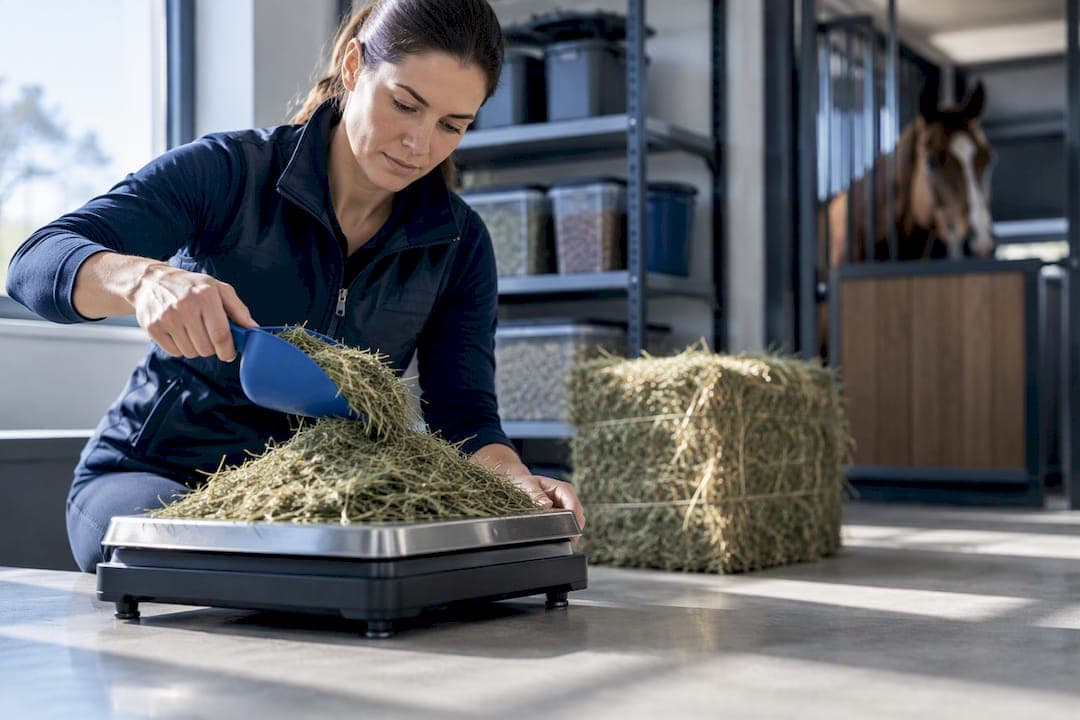
Track cost per horse monthly using one formula: variable cost per horse plus allocated fixed cost per horse equals your true cost per horse. Run this at month end using invoices, feed logs and hours worked, then compare it against your board fee. If a stable manager does nothing else, open a spreadsheet template today and start entering last month's numbers by horse.
TL;DR:
- Tracking monthly variable and fixed costs per horse helps identify which animals are unprofitable and allows for more accurate board fee adjustments.
- Accurate allocation of fixed costs, such as depreciation and rent, depends on using the right method, especially considering stall occupancy and asset lifespan.
- Implementing a proper bookkeeping system, including pass-through expense accounts and tagging transactions immediately, prevents double-counting and unreliable numbers.
- Using body condition scores and workload data refines feed cost estimates, reducing waste and providing more precise monthly expenses.
- Software platforms like EquiBETS streamline multi-owner management, automatic expense allocation, and offline data capture, making manual spreadsheets obsolete at scale.
Table of Contents
- Why per horse cost tracking matters for pricing and profitability
- Cost categories and allocation: variable vs fixed, and where depreciation fits
- How do you set up spreadsheet or software tracking for each horse?
- What's the formula for monthly and annual per-horse cost?
- Bookkeeping traps that quietly wreck per-horse accuracy
- How does body condition data improve feed cost accuracy?
- What tech and bookkeeping stack actually gets you accurate numbers?
- How EquiBETS handles per-horse finance tracking
- Where to check the numbers yourself
- Sources
- FAQ
Why per horse cost tracking matters for pricing and profitability
Board fees set without real numbers behind them are guesses dressed up as business decisions. Per-horse costing tells you which animals cost more than they bring in, whether your board fee actually covers a stall's true expense, and how much room you have before a price rise becomes unavoidable.
Owner reimbursements are the clearest example. A horse that needed three emergency farrier visits and a lameness workup this quarter has a completely different cost profile to the paddock companion two stalls down, and if you're not tracking that separately, you're either eating the loss or under-billing the owner. Feed and labour costs also swing with the seasons, hay prices spike after a poor cut, and casual staff hours creep up during foaling season, which is exactly why a once-a-year budget review misses the changes that actually hurt margin.
Practical uses for monthly per-horse data include:
- Setting or adjusting board fees before a losing quarter becomes a losing year
- Flagging high-cost horses early, whether from health issues, workload, or feed volume
- Reconciling what you've billed owners against what you've actually spent on their behalf
- Comparing your numbers against equine financial statement benchmarks to see if your admin or facility costs are drifting out of line with industry norms
Stables that run this monthly, rather than annually, catch the hay-price spike in the month it happens, not six months later when the damage is already done.
Cost categories and allocation: variable vs fixed, and where depreciation fits
Every dollar you spend on horses falls into one of two buckets, and mixing them up is the single most common reason per-horse numbers go wrong. Variable costs move with the number of horses on the property: feed, bedding, direct labour tied to individual care, consumables like fly spray and wound dressings, and any vet or farrier work billed to a specific animal. You measure these in physical units, bales of hay, litres of supplement, hours of grooming time, then convert to dollars per horse per month.
Fixed costs stay roughly the same whether you have eight horses or twelve: rent or mortgage on the facility, insurance, utilities, the wages of staff who maintain the property rather than individual horses, and depreciation on arenas, fencing and equipment. These don't allocate themselves. You choose a method, either spread fixed costs across the number of occupied stalls or across your total stall capacity, and the choice matters more than most managers realise.
Statistic Callout: Extension guidance from Iowa State's equine program is explicit that fixed costs like rent, insurance and depreciation must be allocated per horse to arrive at a true annual cost figure, not just tallied as a lump sum against total revenue.
A few allocation rules worth adopting straight away:
- Use occupied stalls, not total capacity, if you regularly run under capacity, otherwise you'll understate true cost per boarded horse
- Depreciate large assets (trailers, arena footing, fencing) over their realistic useful life and divide that annual figure across your stalls
- Treat the opportunity cost of capital tied up in equipment as a real, if soft, cost, particularly if you're comparing leasing versus buying
- Revisit your allocation method annually, not just your raw numbers, since stall counts and asset lists change
Farrier pricing frameworks use this exact logic in reverse, working out vehicle costs, tools and time per job, and the same overhead allocation math applies whether you're pricing a shoeing job or a stall.
How do you set up spreadsheet or software tracking for each horse?
A spreadsheet does the job for smaller yards, provided it captures the right fields from day one. Retrofitting a messy spreadsheet six months in is far more painful than building it properly now.
Your core columns should be:
- Date of the transaction or expense entry
- Vendor (feed supplier, farrier, vet clinic, utility provider)
- Category (feed, bedding, labour, vet, farrier, utilities, insurance, depreciation)
- Horse tag (which horse, or "facility" for shared costs)
- Quantity (bales, litres, hours)
- Unit cost and total cost
From there, a pivot table or a simple SUMIF formula gives you variable cost per horse by summing everything tagged to that horse, and fixed cost per horse by dividing the facility-tagged total by your stall count.
The step beyond spreadsheets is a proper chart of accounts, the structured list of categories your bookkeeping runs on. Set it up so variable and fixed sit in clearly separate account groups from the start, and add a clearing account specifically for pass-through expenses like vet bills you pay upfront and bill owners for later. Our Stable Budget Playbook walks through the ten categories most yards need and the traps that come from skipping any of them.
Yard management software earns its keep once you're juggling multiple owners, recurring costs and audit trails. Platforms built for this handle recurring cost allocation automatically, give owners their own portal to see their horse's expenses without you fielding calls, and capture receipts offline when you're in the barn with no signal. The ROI question is really about your time: if reconciling twelve horses' costs by hand takes you three hours a month, a platform that cuts that to twenty minutes pays for itself fast, and our equestrian software ROI guide walks through that calculation in AUD terms.
Pro Tip: Tag every transaction the moment it happens, not at month end. Retroactively guessing which horse a $40 wormer purchase belonged to is how per-horse numbers quietly become fiction.
What's the formula for monthly and annual per-horse cost?
The formulas are simple once your categories are clean. Variable cost per horse equals feed plus bedding plus direct labour plus consumables, divided by the number of horses on the property that month. Fixed cost per horse equals facility labour plus utilities plus insurance plus depreciation plus maintenance, divided by your number of stalls or total capacity.
Add those two figures together and you get your true cost per horse. Add a margin on top and you get your break-even board fee:
Break-even board fee = variable per horse + fixed per horse + desired margin
Here's a worked example with realistic inputs for a twelve-stall yard:
- Variable costs, total for the month: feed $2,400, bedding $600, direct labour $1,800, consumables $200 = $5,000. Divided across 12 horses, that's $416.67 per horse.
- Fixed costs, total for the month: facility labour $2,200, utilities $500, insurance $300, depreciation $400, maintenance $300 = $3,700. Divided across 12 stalls, that's $308.33 per horse.
- Break-even cost per horse: $416.67 + $308.33 = $725 per horse per month, before any margin.
Statistic Callout: Worked budget examples from University of Wyoming's cost of ownership guide show that swapping a low hay-price year for a high one can shift annual per-horse totals by hundreds of dollars, which is exactly the kind of swing a monthly recalculation catches early and an annual one misses entirely.
That $725 figure is a bare-bones break-even, and it's fragile. Industry guidance consistently points to owners underestimating real horse-keeping costs by a wide margin, mostly because nobody budgets for the pulled shoe, the colic call-out, or the week hay prices jumped after a dry summer.

Bookkeeping traps that quietly wreck per-horse accuracy
The single most damaging mistake in stable bookkeeping is letting pass-through expenses hit your top-line revenue. If you pay a vet $300 upfront and bill the owner $300 back, that's not $300 of income, it's a reimbursement, and recording it as revenue inflates your margin on paper while telling you nothing true about profitability.
The fix is a clearing account. Post the gross vet or farrier cost there, bill the owner from that same account, and clear the balance when payment lands. This keeps your actual operating revenue and cost of goods sold clean, which matters enormously if you're trying to compare your numbers against industry benchmarks or looking to sell the business down the track.
A few operational habits protect your numbers month to month:
- Reconcile clearing account balances every month, not annually, so errors get caught while you still remember the context
- Reprice board fees quarterly against current hay and labour costs, not once a year
- Record bedding by bag or bale count against invoices rather than estimating from total spend
- Log labour minutes per task where practical, even a rough tally beats no record at all
Pro Tip: If an owner disputes a bill, the clearing account ledger settles it in thirty seconds instead of an afternoon of guessing which invoice matched which horse. If you'd rather hand bookkeeping to a professional entirely, firms like KOOT Finance handle small business accounts including the kind of pass-through and reconciliation work stables generate.
How does body condition data improve feed cost accuracy?
Feed is usually the biggest variable line item, and it's also the one most yards estimate rather than measure. Body condition score, paired with actual bodyweight, turns a guess into a defensible number. University of Minnesota Extension puts total feed intake at 2.0 to 3.0% of bodyweight daily for most horses, with harder-working athletes often split closer to 1.5% forage and 1.5% concentrate, and a target BCS around 5.0 to 5.5 on the standard scale.

That range matters because it lets you calculate expected feed cost per horse from weight and workload, rather than dividing your total feed bill evenly across every stall regardless of whether that horse is a 300kg pony or a 600kg warmblood in full work. Feeding to measured weight rather than habit tends to cut waste without any drop in condition, which shows up directly in your monthly feed line.
A few ways digital records sharpen this further:
- Weight tapes or scale readings logged monthly turn feed estimates into calculations rather than guesses
- GPS-tracked ride data ties workload to feed needs, flagging when a horse in heavier work needs a feed adjustment before condition slips
- Owner portals showing real per-horse costs cut down on disputed invoices and repeated phone calls
- Real budget ranges from other single-horse owners, running from roughly $200 to $4,500 a month, give you a sanity check against your own figures
What tech and bookkeeping stack actually gets you accurate numbers?
You don't need enterprise software to get this right, but you do need three things working together: a chart of accounts that cleanly separates variable from fixed, a monthly spreadsheet or ledger you actually update, and one tool that automates recurring cost allocation once you're past a handful of horses.
That baseline is enough to make a real pricing decision every fortnight rather than once a year, which is the whole point. Most yards I've seen get this wrong not because the maths is hard, but because nobody owns the monthly update, so a good system decays into an annual scramble.
— isaac
How EquiBETS handles per-horse finance tracking
Once you're juggling more than a handful of horses and owners, EquiBETS gives you the audit-ready structure spreadsheets struggle to hold onto. The platform builds finance tracking directly into each horse's profile, so recurring costs, owner reimbursements and vet or farrier bills sit against the animal they belong to automatically.

That matters most once your yard hits scale: multiple owners expecting clear statements, frequent pass-through billing, and staff who need to log costs from the barn without waiting for office wifi. EquiBETS captures data offline, syncs it once you're connected, and gives owners their own portal so they can see exactly what they're being billed for without a phone call to you. Combined with GPS ride tracking and nutrition analysis, it links workload and feed cost the way the calculations above suggest you should. EquiBETS Complete runs $9.99 AUD per month with all modules included, and you can trial it before committing to see whether it beats your current spreadsheet setup.
Where to check the numbers yourself
For localised figures, cross-check extension university budgets, AAEP and EquiManagement benchmarks, and current regional hay and veterinary pricing rather than relying on national averages alone.
Sources
- Body condition scoring materials and cost guidance — Iowa State extension
- Ten things you should know about feeding the mature horse — University of Minnesota Extension
- Equine financial statement benchmarks — EquiManagement
- Cost of horse ownership worked examples — University of Wyoming
FAQ
What Is the 20% Rule for Horses?
Industry guidance suggests owners routinely underestimate real horse-keeping costs without this buffer built in.
What Is the 1/2/3 Rule for Horses?
There's no established "1/2/3 rule" in equine cost tracking or feeding guidance that the research supports, so treat any version you've seen with caution. The recognised feeding benchmark is the 2.0–3.0% of bodyweight rule from University of Minnesota Extension, which is the figure to build feed-cost estimates around.
How Much Does It Cost to Keep a Horse Per Month?
Costs vary enormously by discipline, region and facility type, with real owner budgets ranging from around $200 to $4,500 a month. A worked break-even example in this guide lands near $725 per horse monthly before margin and contingency, for a twelve-stall yard with moderate labour and facility costs.
Is 70kg Too Heavy to Ride a Horse?
Rider weight isn't directly part of per-horse cost tracking, but it does affect workload, which feeds into feed and vet cost estimates.
Can Software Replace a Spreadsheet for Per-Horse Cost Tracking?
Yes, once you're managing enough horses or owners that manual reconciliation eats significant time each month. Platforms like EquiBETS automate recurring cost allocation, offline capture and owner reporting, which a spreadsheet can't do without constant manual upkeep.