
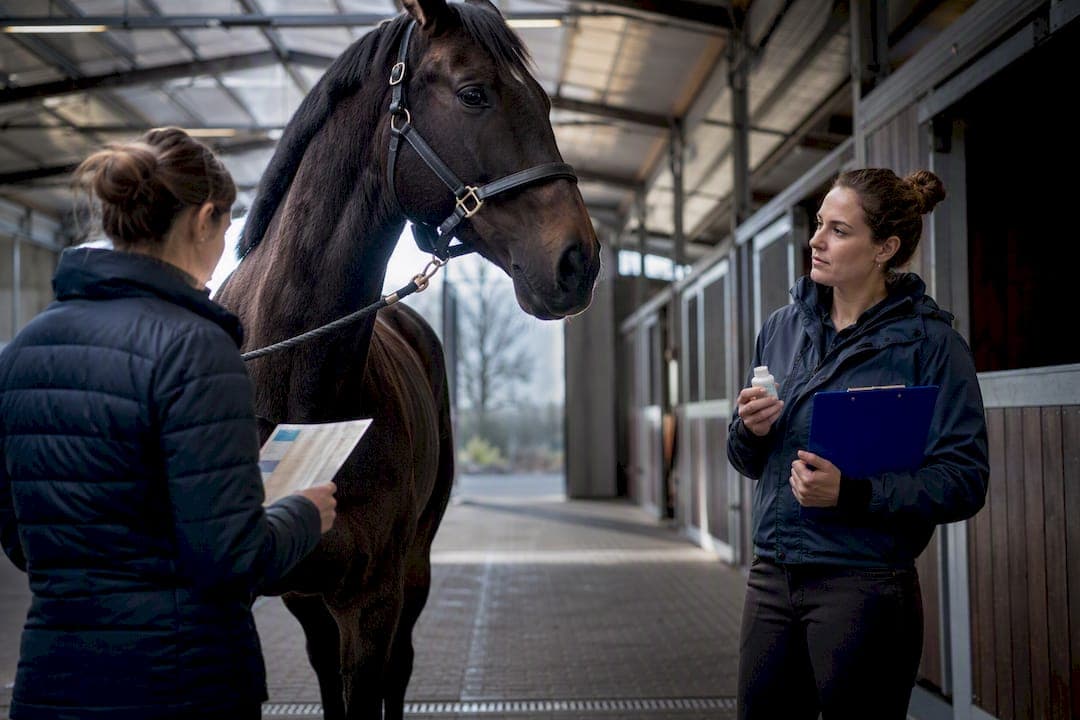
For safe, fair multi owner horse management you need two things locked in before anything else: a written co-owner agreement and one operational system that handles communications, records, and finances. Skip either one and disputes fill the gap. In the first month, get the agreement drafted with a lawyer, put every horse's records in a single source of truth, give every owner portal access, and set a realistic monthly budget everyone signs off on.
TL;DR:
- A detailed, jurisdiction-specific co-owner agreement is essential to define ownership shares, decision thresholds, expense sharing, prize-money distribution, and dispute resolution processes.
- Clear roles and structured facility design reduce operational errors and ensure consistent communication, with roles like managing owner, yard manager, and emergency lead explicitly assigned.
- Owner portals with searchable, timestamped updates and role-based access surpass group chats for communication, creating a reliable record system for health, expenses, and event history.
- Budget transparency through itemized monthly costs and a consistent billing method, either by individual percentage or pooled fund, minimizes disputes over expenses.
- Maintaining shared, accessible medical records and an offline emergency plan ensures quick, accurate treatment and informed decision-making during urgent situations.
Table of Contents
- What should a multi-yard management co-owner agreement cover?
- How do you structure yard roles for horses with multiple owners?
- Why do owner portals beat group chat for horse updates?
- What does a fair budget and billing system look like?
- How should you manage medical records and emergency access?
- How do you resolve disputes without going to court?
- What share structures do horse syndicates commonly use?
- What technology should a multi-owner yard actually run on?
- What actually goes wrong in multi-owner setups
- How EquiBETS puts these systems in one workspace
- Sources
- FAQ
What should a multi-yard management co-owner agreement cover?
A co-owner agreement is the constitution for your horse. Without one, every disagreement about vet bills, sale decisions, or who gets the final say defaults to whoever shouts loudest or whoever paid the last invoice. Standard agreement templates used across the racing industry give a useful starting framework, covering the clauses that come up in almost every ownership dispute.
At minimum, your agreement needs to nail down:
- Ownership shares — the exact percentage each party holds, and how that maps to costs and any prize-money or resale proceeds.
- Managing owner duties — who makes day-to-day calls (trainer instructions, farrier bookings, minor vet visits) without needing a group vote.
- Decision-making thresholds — what counts as "routine" versus "major," and the vote required for each.
- Expenses and invoicing — billing frequency, what's included in the base fee, and how disputed charges get resolved.
- Prize-money distribution — timing and method of payout, and how it's split against ownership percentage.
- Sale or transfer of a share — whether existing owners get first right of refusal, and at what valuation method.
- Termination or buyout — the process if one owner wants out, including a timeframe for the remaining owners to buy their share.
- Insurance obligations — who arranges cover, minimum policy standards, and how premiums are split.
- Notices and data privacy — how formal communications are delivered, and who can access financial or medical records.
That split matters because unanimous consent on small decisions grinds operations to a halt, while a simple majority on a sale can leave a large minority owner with no real say in losing their asset.
Draft language should be specific, not aspirational. "The managing owner may authorise veterinary treatment up to $500 without owner consultation" works. "The managing owner will act in the horse's best interests" does not, because it settles nothing when a dispute actually happens. Always get a solicitor to review the final document. Templates get you 80% of the way, but jurisdiction-specific enforceability, especially around buyout valuations and dispute clauses, needs a professional eye.
How do you structure yard roles for horses with multiple owners?
Clear job titles prevent the two most common failures in shared horse care: tasks falling through the cracks, and two people doing the same job with conflicting instructions. A facility with six roles and six horses runs cleaner than one horse with six people all assuming someone else fed it.
The roles that matter most:
- Managing owner — the single point of authority for trainer and vet decisions within agreed spending limits.
- Yard manager — runs the daily roster, oversees staff, and owns the master schedule.
- Feed and medication lead — the only person who alters feed formulas or medication doses without a vet order.
- Groom — executes the daily care plan and flags anything abnormal immediately.
- Finance contact — collects invoices, tracks the budget, and answers owner billing questions.
- Emergency lead — the first call after hours, with authority to approve emergency treatment on the spot.
Rota design should minimise walking distance and handovers, not just fill hours. A well-laid-out yard groups horses by feeding time and medication schedule rather than by owner, which cuts errors during shift changes. Facility design research from Texas A&M's Parsons Mounted Cavalry found that structured feeding systems and defined veterinary zones reduced colic incidents and other health issues in large herds, largely because staff weren't improvising routes and routines on the fly.
Feed cards pinned to each stall, medication logs signed at the time of administration (not from memory at the end of the shift), and role-based access to horse records all stop the same failure mode: someone acting on outdated or wrong information. Large boarding operations that scale past a handful of horses lean hard on this kind of role clarity specifically because informal, memory-based systems break down once more than two or three owners are involved.
Pro Tip: Print feed cards in a fixed format (horse name, AM/PM dose, allergies, last updated date) and laminate them. A digital record is only as good as the paper backup when the tablet is flat or the Wi-Fi drops.
Why do owner portals beat group chat for horse updates?
Because group chats have no memory and no permissions. A dispute six months later about whether an owner was told about a lameness issue is unwinnable in a WhatsApp thread with 400 messages and no search function. A portal with a timestamped, attributable record settles it in seconds.
Every owner update, whether it's a daily note or a pre-event report, should include four things: the horse's current status, any attachments (photos, vet notes, invoices), a cost note if the update relates to spending, and a clear date and author. Weekly summary updates work for most yards, with same-day updates required for anything medical, an injury, or a change in behaviour. Pre-event updates (soundness check, travel plan) and post-event reports (result, recovery notes, next steps) should follow a fixed template so owners can compare across horses and over time.
Purpose-built owner portals centralise nominations, vet visits, invoices, and event history in one searchable place, and that searchable history is the real advantage over informal messaging. When an owner asks "did anyone mention this before?", the answer should be a search query, not a scroll through a year of chat backlog.
A decent portal, at minimum, needs to offer:
- Searchable message and update history tied to each horse
- File attachments (vet reports, X-rays, invoices) stored against the correct date
- Role-based views, so an owner sees their horse's data and nothing else
- An audit trail that timestamps every entry and who made it
- Emergency access that lets a treating vet see relevant history even if they're not a normal user
Yards that document communication consistently, rather than relying on ad hoc phone calls, see fewer disputes escalate to formal complaints, because there's a record both sides can point to instead of competing memories of a phone call. If you want a deeper breakdown of what a working communication system looks like day to day, this guide to owner communication covers the workflow end to end.
What does a fair budget and billing system look like?
Per-horse costs vary enormously by discipline and location, but a transparent monthly budget should break down at least four line items: livery or agistment, feed and supplements, farrier and routine vet care, and a contingency line for the unplanned stuff. Owners who see a lump-sum "horse expenses: $1,400" invoice with no breakdown are the ones most likely to dispute it later. Owners who see itemised categories rarely argue over the total, even when it's higher than expected.
There are two workable billing models for a shared horse:
- Direct invoicing by percentage — each owner is billed their exact ownership share of every cost as it happens, which is transparent but generates more admin per invoice cycle.
- Pooled fund with an admin account — owners pay a fixed monthly amount into a shared account, the managing owner or finance contact pays bills from it, and a reconciliation report goes out monthly or quarterly.
Pooled accounts work better for syndicates with more than three or four owners, purely because chasing individual sign off on every farrier bill doesn't scale. Billing should run as one consistent workflow, whether that's automatic percentage splits or a pooled account, rather than manual splitting done fresh each month, because ad hoc arithmetic is where errors and resentment creep in.
Prize-money distribution should follow the ownership percentage set in the agreement, paid out promptly after the event with a statement showing gross winnings, any deductions (jockey fees, levies), and the net amount per owner. Tax treatment of prize-money and running costs varies by jurisdiction and by whether the horse is held as a business asset or a private one, so get advice from an accountant familiar with equine ownership structures in your own country rather than assuming a rule that applies elsewhere applies to you. Keep every receipt and every report. An audit-ready file, built as you go, is far less painful than reconstructing one from memory after a dispute starts.
How should you manage medical records and emergency access?
A shared horse needs a shared medical file, not four owners each holding half the picture in a separate vet's system. The record should cover treatment notes, vaccination dates, known allergies, and a running controlled-drug log if the horse is on any scheduled medication.
Structure it like this:
- Treatment history — dated entries from every vet visit, searchable by condition or by date.
- Vaccination and worming schedule — next due dates visible to whoever books appointments, not just the managing owner.
- Allergy and sensitivity flags — visible at the top of the file, not buried in a note from eighteen months ago.
- Medication administration log — signed at the time of dosing, with controlled substances logged separately and kept under lock and key.
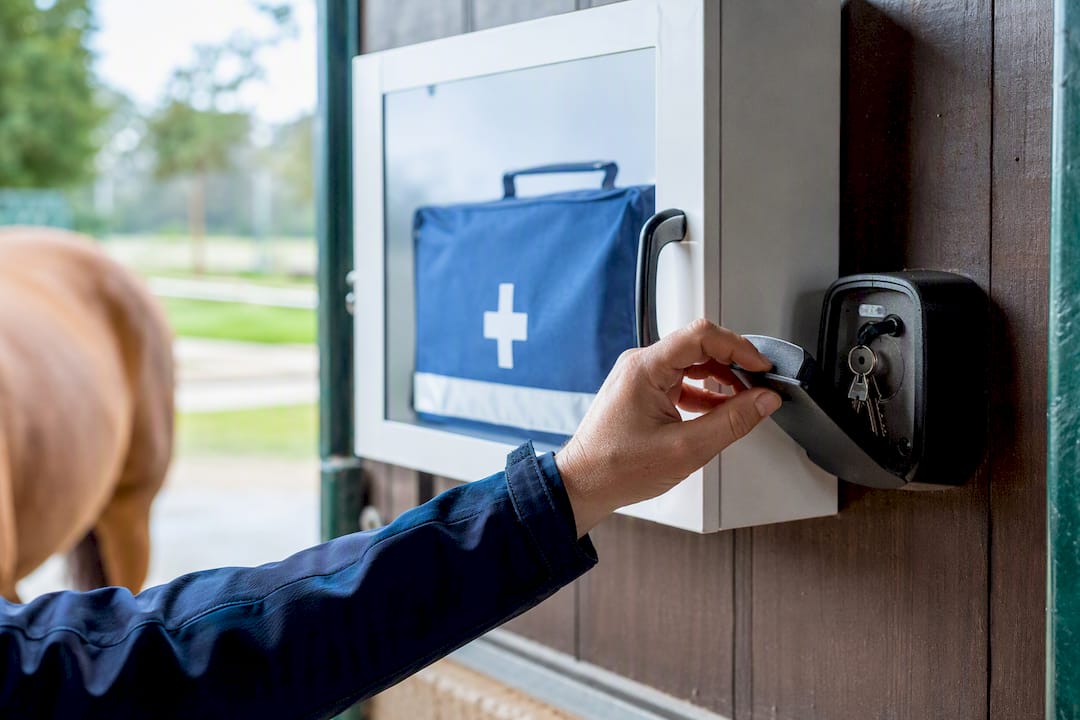
- Digital emergency plan — emergency contacts, permitted treatment scope for the managing owner, insurance policy number, and location or access details for the property.
Ambulatory vets working out of hours need offline access to this file. A record locked behind a login that fails without signal on a rural property is worse than a paper folder in the truck. Offline access workflows matter more in equine care than in most other fields precisely because so much of it happens paddock-side, not in a clinic with reliable Wi-Fi.
Pro Tip: Build the emergency plan before you need it, not during a 2am call. A vet who's never met the horse needs the insurance policy number, the managing owner's authorised treatment limit, and the property gate code in under sixty seconds, not after five phone calls to different owners. A structured digital emergency plan built in advance solves this properly, and a medical records system designed for multi-owner access keeps the whole file consistent across owners and vets.
How do you resolve disputes without going to court?
Most co-ownership disputes escalate because nobody set an escalation path in advance, so every disagreement becomes a first-time negotiation. A staged ladder, agreed before anyone's angry, keeps most disputes contained.
- Stage one: written notice. The dissatisfied owner puts the issue in writing with supporting evidence (invoices, vet notes, portal history) and a proposed resolution, with 14 days to respond.
- Stage two: internal mediation. A neutral party, often the managing owner if they're not the one in dispute, reviews both sides and proposes a resolution within 21 days.
- Stage three: independent arbitration. An external arbitrator or expert determination process, agreed in the original contract, delivers a binding decision.
- Stage four: defined buyout trigger. If the relationship is unworkable, the agreement's buyout clause activates, with a pre-agreed valuation method.
Meeting minutes and portal audit logs are the evidence that makes every stage faster. A dispute where both sides can pull up a dated, timestamped record of what was agreed resolves in days. One where it's memory against memory drags on for months.
What share structures do horse syndicates commonly use?
Fractional shares, often sold in units of 10%, 5%, or 2.5%, are the industry standard because they scale cleanly against both cost and prize-money splits. Syndicate structures built this way let a manager add or remove owners without redrafting the entire cost model each time, since every share is worth an identical fraction of every expense and every payout.
Rights attached to a share should be spelled out, not assumed:
- Voting rights — usually proportional to share size, though some syndicates cap any single owner's vote to prevent a majority stake from dominating decisions.
- Racing or competition instructions — typically reserved for the managing owner or trainer, not put to a vote per event.
- Sale consent — existing owners often get first refusal on a share sale before it goes to an outside buyer.
A simple governance model for a small or medium syndicate: one managing owner with day-to-day authority, a majority vote (51%) for spending above an agreed threshold, and a 75% vote for anything permanent, sale, trainer change, or dissolving the syndicate entirely.
What technology should a multi-owner yard actually run on?
Spreadsheets and group chats get a two-horse partnership through the first season. They fall apart the moment a third owner, a second vet, or a syndicate of ten joins the picture. At that point, the yard needs a system, not a workaround.
The non-negotiable feature list:
- An owner portal with searchable history and role-based permissions
- Offline mobile access for staff and vets working without reliable signal
- Syndicate billing that splits costs by percentage or runs a pooled account automatically
- Finance dashboards that separate staff-facing operational data from owner-facing summaries
- A digital emergency plan with instant vet access to critical details
- Role-based permissions so each user sees only what's relevant to them
Facility management systems built for this scale commonly include turnout compatibility checks and digital contract signing alongside billing, because the operational and legal sides of multi-owner care need to sit in the same place, not three different apps. EquiBETS was built around exactly this list: owner portals, offline access, finance tracking, and emergency plans in one workspace built for professional yards.
What actually goes wrong in multi-owner setups
The failures I keep coming back to aren't dramatic. They're small, boring gaps: a verbal agreement about vet spending limits that nobody wrote down, a group chat where the crucial lameness update got buried under twenty messages about float bookings, an invoice split done from memory that was wrong by $200 and started an argument that outlasted the horse's racing career.
Do: write the agreement before the horse arrives. Don't: assume goodwill replaces governance once money and prize splits are involved. Do: put records in one searchable place. Don't: let "I'll text everyone" become your emergency protocol.
The yards that run smoothly aren't the ones with the fewest owners. They're the ones where nobody has to guess what happens next.
— isaac
How EquiBETS puts these systems in one workspace
You've just read what a working multi-owner setup needs: a real agreement, one operational system, role-based access, and records nobody has to chase down at 2am. Building that from four different apps and a shared spreadsheet is exactly the admin load that burns out managing owners. EquiBETS is a direct route to the same outcome without stitching tools together yourself.

The platform runs owner portals with searchable update history, syndicate billing that splits costs by percentage or through a pooled account, finance dashboards that separate what staff see from what owners see, and a digital emergency plan vets can pull up on the spot. It's built specifically for the operational gaps this guide covers, with offline mobile access for staff and vets working out of signal range, and AI-powered movement analysis layered on top for yards that want more than basic record-keeping.
EquiBETS Complete runs at $9.99 AUD per month, covering unlimited horses and team members after a free trial. If you're currently running a shared horse on spreadsheets and group chats, start the trial and see how much of that admin disappears in the first week, or check the full feature set for yard and staff management before you commit.
Sources
Start with a proper legal framework rather than drafting from scratch. Standard co-owner agreement templates cover governance, managing-owner duties, and dispute clauses used across the racing industry. For facility layout and daily operations, the Texas A&M facility management fact sheet and Stable Management's piece on individual horse care at scale are worth reading before you finalise staff roles. For a broader look at syndicate mechanics, this syndicate structure overview explains share sizing in more depth. If you're separately evaluating client-facing portal design, this breakdown of testable portal features is a useful checklist even outside the equine context.
- Agreements - TOR - Trainer and Owner Reforms
- Improving horse health through thoughtful facility management — Texas A&M PMC
- Managing the needs of individual horses at a large facility — Stable Management
FAQ
What is the 1/2/3 rule for horses?
It's a common rule of thumb in equine care referring to feeding and exercise timing, most often cited as waiting roughly one hour before and after feeding to avoid strenuous exercise, though exact intervals vary by discipline and vet advice. It's not a legal or governance rule, so it has no bearing on co-ownership agreements.
What was Bill Benter's algorithm?
Bill Benter built a computer-based betting model that used statistical analysis of past race data to predict horse racing outcomes, reportedly earning him significant winnings in Hong Kong racing markets over decades. It has no connection to co-ownership governance or yard management, but it's a frequently searched piece of racing trivia.
How did Robert Sangster make his money?
Robert Sangster built his fortune through the Vernons Pools betting business inherited from his family, then reinvested heavily in thoroughbred breeding and racing syndicates across several decades. His syndication model, pooling wealthy investors into shared bloodstock ownership, helped popularise the modern racing syndicate structure many yards still use today.
Who is Ciaron Maher?
Ciaron Maher is a prominent Australian racehorse trainer running a large multi-owner training operation across several stables. His scale of operation is a practical example of why role clarity, syndicate billing systems, and owner communication protocols matter once a yard manages horses for dozens or hundreds of separate owners at once.
What software features should a multi-owner yard require?
At minimum, an owner portal with searchable history, offline mobile access, syndicate billing by percentage or pooled account, and a digital emergency plan with vet access. A complete solution includes these features, with pricing and trial information available on the provider's site.