

Adopt a small set of shift templates, cluster tasks by zone, assign staff with a greedy list-scheduling heuristic and iterative reassignment, then hand the running of it to role-based software. That combination, borrowed from the same list-scheduling and dynamic assignment research used to solve complex real-world rostering problems, produces a workable weekly rota fast.
Every rota needs four non-negotiables: daily coverage of core tasks, a handover overlap window, a hard cap on hours worked, and a named backup for when someone calls in sick.
- Cover feed, turnout, mucking out, and schooling every day, no exceptions
- Build in 15 to 30 minutes of handover overlap between shifts
- Cap shifts and track weekly hours against your yard's limits
- Name a backup or on-call person for every shift, every day
Pro Tip: Pilot the new system in one yard zone for a week before rolling it out everywhere. You'll catch walking-time surprises and staffing gaps while the stakes are still low.
Key Takeaways
Reliable yard staff scheduling combines a small set of zoned shift templates, a greedy assignment heuristic with iterative reassignment, and role-based software to keep it running day to day.
| Point | Details |
|---|---|
| Build zoned templates first | Create five core shift templates and map each to a yard zone before assigning individual staff. |
| Use greedy assignment, then iterate | Assign tasks by start time to the nearest qualified person, then rescan for overlaps and long walks. |
| Track five KPIs | Monitor on-time completion, overtime, walking time, cover rate, and staff satisfaction monthly. |
| Pilot before full rollout | Test the new rota in one zone for a week and debrief daily before expanding it further. |
| Automate with EquiBETS | EquiBETS applies role-based templates, offline mobile access, and owner portals to run the rota live. |
Table of Contents
- What to gather before you build a yard staffing schedule
- How do you design shift templates and rostering rules?
- What's the simplest way to assign staff without buying software?
- Sample weekly rotas you can copy for your yard
- How do you roll out a new yard schedule and measure success?
- How software automates yard staff scheduling
- Try EquiBETS before your next roster goes live
- Frequently asked questions
- Sources
What to gather before you build a yard staffing schedule
A rota built on guesswork falls apart by Wednesday. Before you open a spreadsheet or scheduling app, collect the raw material that makes a roster realistic instead of aspirational.
Start with a task inventory: everything that needs doing, when, and where. Feed rounds at 6am in the north barn. Mucking out by 9am across three yards. Schooling slots booked against the arena calendar. Then layer in your people: who's qualified for what, their contracted hours, and when they'd rather not work.
- Task inventory by time slot and physical location
- Staff skills, certifications, and any handling restrictions
- Contracted hours and preferred availability windows
- Handover requirements between shifts (what needs saying, not just doing)
- Competition and event dates that spike demand
- Payroll and time-tracking system details, so the rota data can flow straight through
Walking time is the variable most yards ignore until it wrecks a schedule. Time a few staff walking your actual routes, sketch a rough zone map, and you'll often find fifteen minutes a day evaporates just crossing the property. That's the gap dynamic assignment research into staff scheduling was built to close, and it applies just as well to a stable yard as to a rail depot.
Run this audit weekly for the first month. Ask your senior groom what actually took longer than planned, and log it.
How do you design shift templates and rostering rules?
Five templates cover most yards: morning feed and turnout, daytime maintenance, afternoon schooling and competition prep, evening feed and lockup, and a separate weekend or event template. Build 15 to 30 minutes of overlap into every handover so nothing gets missed between shifts.
Rostering rules matter as much as the templates themselves. Set a maximum shift length, a minimum rest period between shifts, and a weekly hours cap that doesn't creep upward every competition season. Write down your swap policy and your time-off approval process before someone asks, not after a dispute.
Staffing ratios scale with yard size and activity. A ten-horse private yard might run comfortably on two staff plus a weekend relief; a forty-horse competition yard usually needs a float or relief role built permanently into the roster, not bolted on when someone's sick.
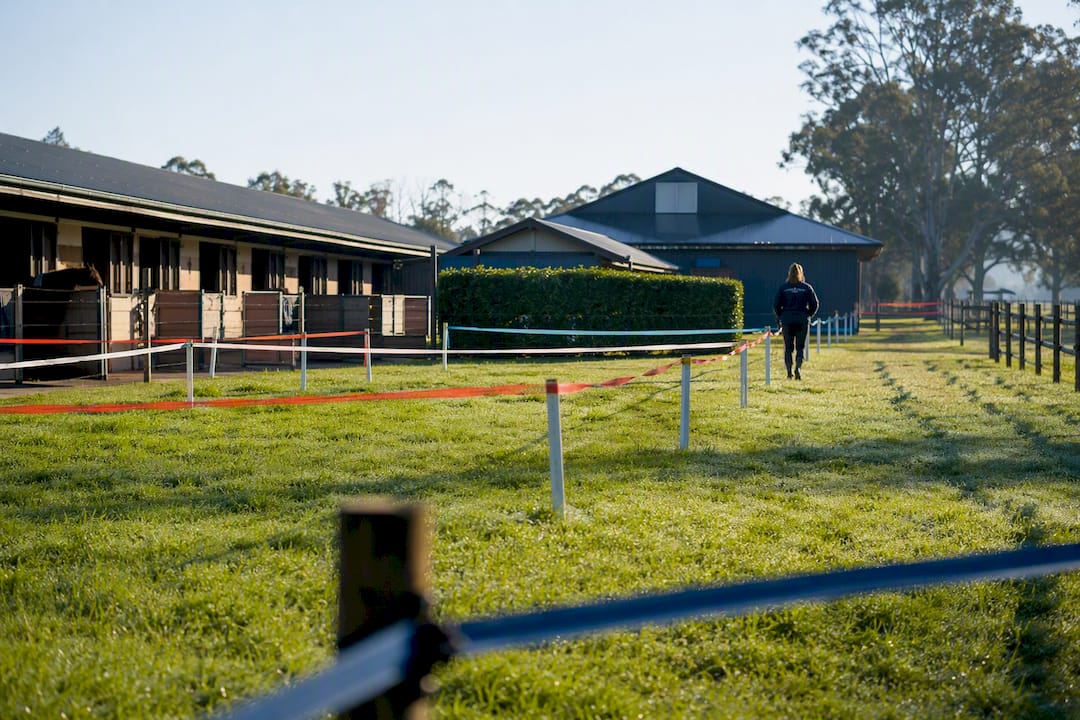
Zoning cuts wasted movement. Map your yard into two or three zones, and assign each shift template to a zone rather than scattering one person's tasks across the whole property.
Pro Tip: Keep a float role on every roster, even in a small yard. It's the cheapest insurance against a Monday morning with two people down.
What's the simplest way to assign staff without buying software?
You don't need a computer science degree to build a solid rota by hand. Order every task by start time, then assign it to the first available, qualified person, one task at a time. That's the greedy or list-scheduling heuristic, and it's the same method behind the 97% solve rate researchers found across 300 realistic yard-scheduling instances, solved in around three minutes each once combined with a walking-time reduction step. It works well when demand is steady and tasks don't overlap heavily. It struggles when several urgent jobs land at the same minute.
That's where iterative reassignment earns its place. Scan the draft rota for conflicts, overlapping tasks, or a staff member zigzagging across the property, and swap assignments to tighten the gaps. Group sequential tasks in the same zone to the same person, the way a rail depot clusters staff to reduce walking between platforms.
- Sort tasks by start time, assign to the nearest qualified, available person
- Rescan for overlaps and long walks, then swap to fix
- Cluster consecutive same-zone tasks to one person where possible
- Stop reassigning once no swap saves more than a few minutes; accept it and move on
Pro Tip: If you're still tweaking the rota an hour before shift start, you've hit diminishing returns. Lock it in and fix tomorrow's version instead.
Sample weekly rotas you can copy for your yard
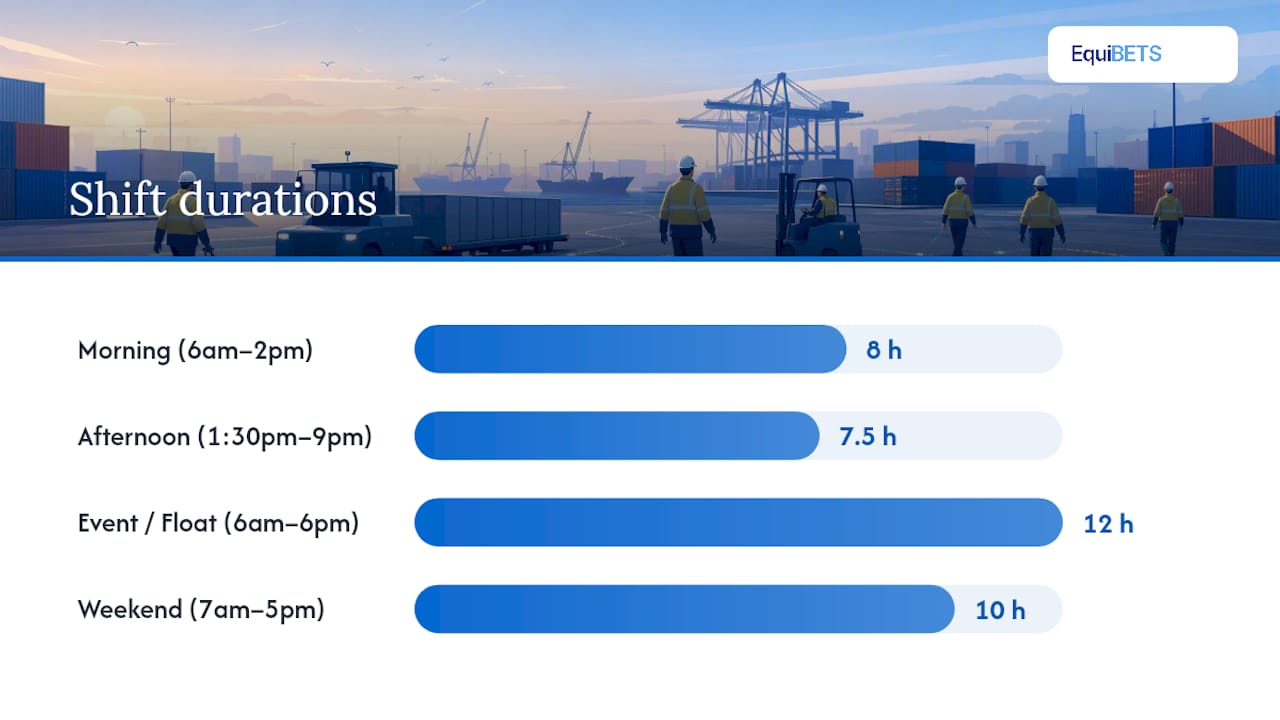
A medium yard (roughly 20 to 30 horses) typically runs three overlapping shifts across two zones. Morning staff cover feed and turnout from 6am to 2pm, afternoon staff handle schooling and maintenance from 1:30pm to 9pm, with the half-hour overlap used for handover notes on any horse needing extra attention.
Small yards can usually collapse this into two shifts with one person covering both zones, provided the property is compact enough that walking time stays low. Larger and competition yards need a third, event-specific template: extra float staff rostered a week ahead of any show, with the regular weekend template suspended rather than stacked on top.
When someone calls in sick, don't rebuild the whole week. Slot the float or relief person into the gap first, then only reshuffle neighbouring shifts if the float can't cover the specific skill needed.
| Day | Shift | Role | Zone | Start | Finish | Notes |
|---|---|---|---|---|---|---|
| Monday | Morning | Groom | North barn | 6am | 2pm | Feed, turnout, mucking out |
| Monday | Afternoon | Groom | South barn | 1:30pm | 9pm | Schooling prep, evening feed |
| Saturday | Event | Float/relief | Arena | 6am | 6pm | Competition support, split lunch |
| Sunday | Weekend | Groom | Both zones | 7am | 5pm | Reduced task list, one handover |
- Import this structure into a CSV and adjust zone names to match your own yard map
- Keep the notes column detailed. It's where handover context actually lives
How do you roll out a new yard schedule and measure success?
Run the new rota in one zone for a week before touching the rest of the yard. Debrief daily, even if it's five minutes at the end of shift, and keep a running list of what broke.
- Week one: pilot in a single zone, daily debrief
- Week two: fix the obvious problems, expand to a second zone
- Weeks three and four: full rollout, with weekly rather than daily check-ins
- Month two: switch to monthly review once the rota is stable
Before you go live, make sure every staff member knows how to read the rota, understands the swap process, and knows who owns last-minute changes. That's usually you or a deputy, not whoever's rostered on.
Track five numbers: on-time task completion, overtime hours, planned versus actual walking time, cover rate when someone's away, and staff satisfaction from a quick monthly check-in. A useful anchor for capacity is the 75–85% utilisation band recommended in general workforce capacity planning. Below that and you're overstaffed for the workload; above it and there's no buffer left for the unexpected foal check or the vet running late.
Statistic callout: Greedy list scheduling combined with a walking-time reduction step solved 97% of realistic scheduling instances in under three minutes average runtime. If your manual rota is taking longer than that to sanity-check by hand, it's a sign the task list has outgrown a spreadsheet.
How software automates yard staff scheduling
Software takes over the parts of scheduling that eat your Sunday evenings: applying role-based templates automatically, checking capacity before it lets you overbook someone, pushing notifications when a shift changes, and handling swap requests without six text messages. Good platforms also feed hours straight into payroll and time-tracking, cutting out the manual reconciliation that causes most pay disputes.
For a yard specifically, three features matter more than the rest: offline mobile access for staff working somewhere with patchy signal, an owner portal so horse owners see updates without calling the office, and role-based permissions so a groom sees their shift while a manager sees everything.
EquiBETS builds directly on the heuristics above. Templates handle the greedy assignment step, the platform flags conflicts for the iterative reassignment pass, and its analytics give you the data to run an optimisation check later if you want to validate robustness across a busier season. Its stable manager module consolidates team coordination, owner updates, and emergency plans in one place, useful when a pilot depends on everyone actually seeing the same rota.
Pro Tip: Run your pilot week with your existing spreadsheet rota entered into EquiBETS in parallel. You'll see within days whether the live version catches conflicts your spreadsheet missed.
Quick lessons from running yard schedules
Start small. A one-zone pilot exposes the walking-time problems a full rollout hides until week three. Expect exceptions, because the horse that colics on a Tuesday doesn't care about your template. And make swaps genuinely simple, because staff who trust the swap process stop quietly working through it and start using it, which is where the real drop in unplanned overtime comes from. Weekend and competition weeks will always run tighter. Plan the float role for those weeks specifically, not as an afterthought.
Try EquiBETS before your next roster goes live
Equibets turns the templates and heuristics above into a rota staff can actually check from the yard, not just from the office computer. Instead of rebuilding a spreadsheet every time someone swaps a shift, the platform updates in real time, keeps a record of hours for payroll, and gives horse owners visibility without a phone call.

Start with a free trial and import your current CSV rota to compare planned versus actual walking time after one week. If your yard runs on tight staffing ratios during competition season, the stable manager features are worth testing first, since that's where coordination usually breaks down. Check the pricing page for what's included before you commit, and if nutrition planning is part of your workload, the nutrition analysis tools sit in the same subscription. Staged automation, starting with templates and reminders before adding capacity checks, is also the approach recommended in general scheduling automation guidance for small operations moving off spreadsheets.
Frequently asked questions
What is the best way to start yard staff scheduling from scratch? Run a task audit first, then build two or three shift templates covering feed, turnout, and schooling before adding weekend or competition variants.
How much staff overlap should a handover include? Most yards work well with 15 to 30 minutes of overlap, enough to pass on notes about individual horses without eating into productive time.
Can I manage yard staff scheduling without software? Yes, for a small yard a greedy assignment approach on paper or a spreadsheet works fine, though it gets harder to maintain past a handful of staff and multiple zones.
What KPIs actually show whether a new rota is working? Watch overtime hours, cover rate during absences, and planned versus actual walking time. All three tend to improve within a month if the templates and zoning are right.
How does EquiBETS help with staff scheduling specifically? It automates role-based templates, gives staff offline mobile access to the live rota, and feeds an owner portal so updates don't require phone calls, all inside one subscription.
Sources
- The train unit shunting problem with staff scheduling (ATMOS 2020) — research portal copy
- Scheduling automation for small business 2026 guide | Tech Business Development