
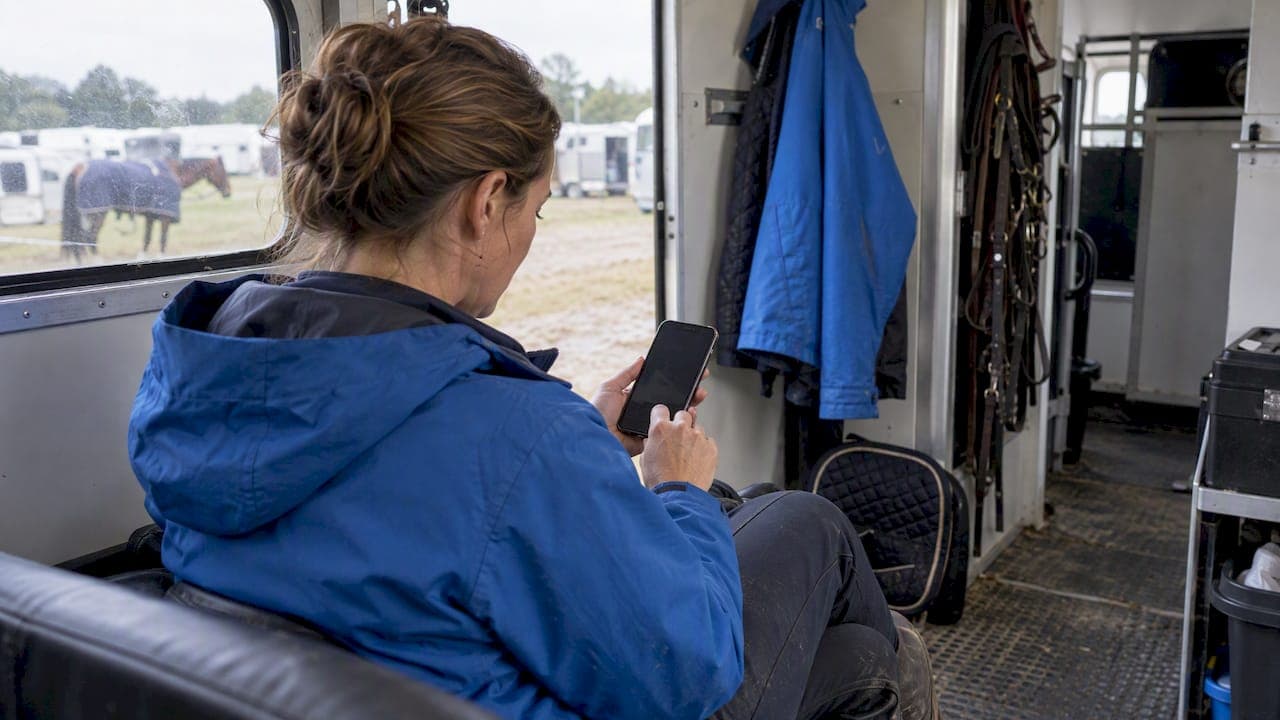
Stable operators should give horse owners role-limited, timestamped access to the records that matter, viewable and downloadable in real time, with every request enforced on the server rather than trusted to an app screen. That means strict access rules, full audit logs, and retention schedules that stop sensitive files piling up indefinitely.
TL;DR:
- Owner portals should enforce server-side access controls, timestamp changes, and maintain audit logs to prevent unauthorized document access and data leakage.
- Real-time updates and clear timestamps for care summaries, invoices, and records are essential to prevent disputes and improve owner trust.
- Permissions must follow the principle of least privilege, with roles carefully mapped to allow access only to relevant documents and actions, especially across multiple owners.
- Data retention rules should be specific to each document type, with automated deletion or archiving after the required period to stay compliant.
- Using a specialized platform helps yards efficiently manage security, permissions, and access, reducing staff workload and strengthening owner relationships.
Table of Contents
- What an owner portal should include for documents and records
- Security and authorisation: practical controls operators must enforce
- Data protection and retention: rules to stay compliant and reduce risk
- Practical checklist: set up secure owner document access this week
- Why a well configured owner portal is a business advantage for pro yards
- How EquiBETS helps yards deliver secure owner document access
- FAQ
- Sources
What an owner portal should include for documents and records
Owners expect to see the documents that affect their horse's welfare and their own costs, without ringing the yard office every time something changes. A properly built portal draws a clear line between what owners see and what stays internal to staff.
Documents worth sharing typically include:
- Care summaries and daily log extracts relevant to that specific horse
- Vaccination and health certificates
- Invoices and itemised expense statements
- Training notes and progress reports
- Farrier and veterinary visit records tied to that horse
Internal staff notes, incident reports involving other clients, and draft billing adjustments should stay out of the owner view entirely. These aren't documents owners need; they're working notes that create confusion or dispute risk if shared half-finished.
Real-time linking matters more than the document list itself. When a farrier entry or a training note updates the horse's record, the owner's portal should reflect that change the same day, not at the end of the month. This is the difference between a portal owners actually use and one they ignore because it's always stale. Our guide to owner portal features covers which live data points cut the most routine phone calls.
Usability features matter just as much as content. Clear timestamps on every document, version history so nobody argues about which invoice is current, secure download links rather than email attachments, and offline access for owners checking updates from a trailer or a show ground with patchy signal.
Security and authorisation: practical controls operators must enforce
A document portal is only as safe as its access controls, and most of the risk sits in how permissions are enforced, not in the interface itself.
- Apply the principle of least privilege: define roles such as owner, rider, viewer, staff and vet, and give each the minimum access needed for its purpose. NIST's guidance on role-based access control treats this as the foundation of preventing unauthorised disclosure, and it only works when permissions are checked on the server for every request, not assumed from what the app screen shows.
- Guard against insecure direct object references and forceful browsing. OWASP's Authorization Cheat Sheet flags these as the most common real-world authorisation failures, where a user changes a document ID in a request and retrieves a file that was never meant for them.
- Require multi-factor authentication for admin and staff accounts, keep session lifetimes reasonable, and handle access tokens carefully rather than leaving them valid indefinitely.
- Log every document access event: timestamp, user ID, action taken. Review these logs on a regular schedule and set up alerts for unusual patterns, such as one account pulling dozens of documents in a short window.
OWASP Cornucopia's authorization guidance also points to field-level and cross-tenant controls as essential wherever a platform serves multiple yards or multiple owners within one yard, which is exactly the shape of most equine management software.
Pro Tip: Test your own authorisation setup by creating two owner accounts, uploading a document under one, then trying to fetch it from the other by changing the document ID in the request; a correct system returns a denial, not the file.

Data protection and retention: rules to stay compliant and reduce risk
Every document category should be mapped to the minimum data it genuinely needs and a clear reason for holding it. A vaccination certificate needs the horse's identity and the vaccine details; it doesn't need the owner's full financial history attached to the same record.
Practical steps that keep this manageable:
- List each document type and write down why it's collected and how long it needs to be kept
- Set retention periods by category: invoices, veterinary records and emergency plans each warrant their own schedule rather than one blanket rule
- Automate archival or deletion once a retention period lapses, rather than relying on someone remembering
Holding personal data longer than necessary is likely to breach data protection obligations, according to the UK Information Commissioner's Office guidance on data minimisation, which applies to any organisation handling personal data under UK GDPR. Operators outside the UK should check their own jurisdiction's equivalent rules, but the underlying principle holds broadly: collect only what a document's purpose requires.
Where AI features touch owner data, such as movement analysis or nutrition modelling, be transparent about what's processed and why; for secure media sharing solutions with clear owner contracts, see Best NicoleSchultzPhotography.com Alternatives for Equestrian Shoots. The ICO's guidance on lawfulness in AI recommends mapping a lawful basis for each distinct processing operation, separately from the basis used for basic record storage, and documenting that decision rather than treating "we use AI" as a single catch-all justification.
Practical checklist: set up secure owner document access this week
Most of this can be configured in a matter of days once roles and document categories are agreed.
- Define roles and default permissions: decide what owner, rider, viewer, staff and vet can each see by default.
- Map every document category to the roles allowed to view it, and flag anything that must stay internal-only.
- Enable server-side authorisation on document endpoints and run a basic IDOR test with two representative accounts before going live.
- Set retention rules per document type and automate archival or deletion once each period lapses.
- Assign one person to review retention settings quarterly so schedules don't quietly go stale.
- Configure emergency vet access using time-limited tokens that expire automatically, rather than permanent vet logins.
- Turn on audit logging and put a short review of recent access on the calendar monthly.
- Brief staff on privacy basics: how to handle an owner's request to see, correct or delete their data, and who owns that process.
Pro Tip: Keep emergency vet access separate from an owner's standing permissions; a short-lived signed token that expires in a few hours limits exposure far better than a shared login that never changes.
Why a well configured owner portal is a business advantage for pro yards
A portal that shows real-time documents and finance detail cuts the number of calls asking "what's my balance" or "has the vet been out yet." Owners check the app instead of the office phone, which frees staff time for actual horse care rather than admin queries.

Timestamped records also settle disputes before they start. When a training note or a farrier visit is logged the day it happens, there's no argument later about what was done and when, which matters at competitions and during ownership handovers alike.
For syndicate and multi-owner arrangements, this kind of transparency becomes part of the pitch itself: yards that can show owners a clear, current record of their horse's care and costs tend to retain those owners longer, because the relationship feels professional rather than reactive. Our breakdown of multi-owner role management covers how to structure permissions when several owners share one horse.
— isaac
How EquiBETS helps yards deliver secure owner document access
Building all of this from scratch, roles, server-side checks, retention schedules, audit logs, is a lot to maintain alongside actually running a yard. We built EquiBETS Complete to carry that load for you.

Our platform gives owners a portal with updates on care records, documents and invoices, backed by an audit trail. Alongside that:
- Finance tracking to help keep owners current on costs
- Emergency plans to provide vets and responders access to critical information when needed
- Offline mobile access so staff can log care and owners can check updates
EquiBETS Complete is available at $9.99 AUD per month, and we offer a free trial if you want to see how the permissions and document flows work for your own yard before committing.
FAQ
What should a horse owner be able to see in a document portal?
Owners should generally see care summaries, vaccination certificates, invoices and training notes tied to their own horse, updated in real time. Internal staff notes and records involving other owners should stay outside their view.
How do server-side permissions protect owner documents?
Server-side checks verify that a request for a specific document is actually allowed for that user, rather than trusting what a screen shows them. This closes a common gap called insecure direct object reference, where changing an ID in a request could otherwise expose someone else's files, as described in OWASP's authorization guidance.
How long should a yard keep horse ownership documents?
Retention periods should match the purpose of each document type rather than following one blanket rule; invoices, vet records and emergency plans often warrant different schedules. The ICO's data minimisation guidance recommends holding personal data no longer than the stated purpose requires.
What does EquiBETS cost for owner portal access?
EquiBETS Complete is priced at $9.99 AUD per month and includes the owner portal, document access, audit trail, finance tracking and offline mobile access in one plan, as listed on the EquiBETS pricing page.
How do I give vets emergency access without full owner permissions?
Time-limited, signed access tokens that expire automatically and permit only a narrow set of actions work better than a standing vet login. Our piece on secure vet access to horse data walks through setting this up alongside standard owner permissions.
Sources
- Role-based access control (RBAC) — features and motivations | NIST
- Principle (c): Data minimisation | ICO
- Authorization cheat sheet | OWASP
- Authorization (AZ5) | OWASP Cornucopia