
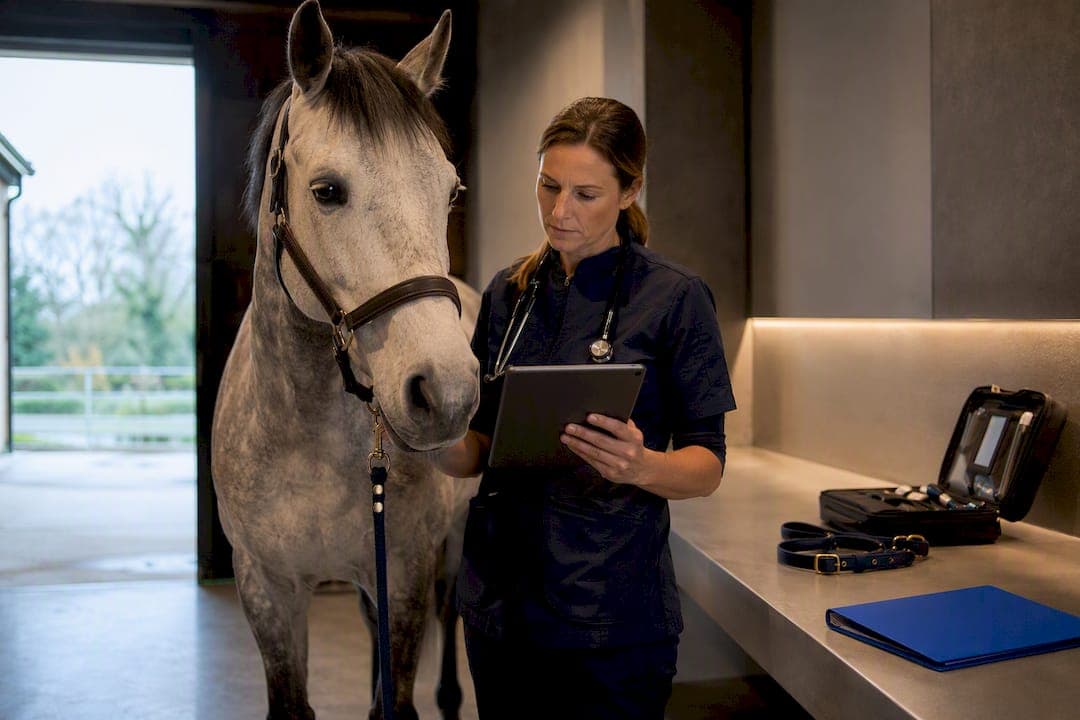
Vets get horse data through three practical routes: national registries with microchip lookup, practice EMRs or yard portals, and event or lab systems tied to a specific test. The fastest next step is simple: request vet portal access from the platform or registry, or ask the owner or yard manager for the horse's microchip ID and emergency card before the visit.
TL;DR:
- Veterinarians should prioritize gaining quick access to microchip and owner information through verified portals or owner-provided IDs before the appointment.
- Critical horse data includes vaccination schedules, controlled drug logs, recent diagnostics, and emergency contacts, all of which must be instantly available in an emergency.
- Health records must meet strict security standards, including vet verification, role-based permissions, audit trails, data encryption, and easy export options.
- Offline access with local synchronization is essential for remote yards or event work, and pre-downloading data helps maintain continuity without internet.
- Fragmented records across multiple systems pose serious clinical risks, making verified vet portals and digital record-keeping vital for safe, efficient horse care.
Table of Contents
- Where do vets normally find horse records?
- How do veterinarians gain authorised access?
- What horse data do vets need at the point of care?
- What security and privacy standards should vet systems meet?
- How do vets handle records with no connectivity?
- Why vet-ready data matters more than yards think
- Get vet-ready horse records without the paperwork chase
- Core registries and guidance worth bookmarking
- Sources
- FAQ
Where do vets normally find horse records?
Vet access to horse data rarely comes from one place. It comes from whichever system the owner, yard, or last treating clinician happened to use, which is exactly why knowing the routes matters.
- National registries and official vet portals. In the UK, the Central Equine Database lets authorised vets search by microchip to confirm identity and pull vaccination history, controlled drug records and death status. This is the closest thing the industry has to a single source of truth for identity.
- Practice EMRs and equine-specific platforms. Day-to-day clinical notes, bloods, and treatment plans usually live in whatever software the practice or yard runs, not the registry.
- Owner and yard-shared portals. Digital passports, Coggins tests, and eCVI connections often sit in a separate owner-facing app, updated inconsistently depending on how engaged the yard is.
- APIs and lab portals. Diagnostic labs increasingly expose results through their own portals or feeds, which need to be matched back to the right horse manually unless the systems talk to each other.
The gap between these systems is where clinical risk creeps in, particularly for horses that move between yards, sales, or competitions.
How do veterinarians gain authorised access?
Getting vet access to horse records is mostly an administrative process, and it is faster when you come prepared.
- Verify your credentials first. Registries and platforms generally check practising status against a professional register before granting access, similar in spirit to RCVS-style verification in the UK.
- Submit a clear access request. Include your registration number, clinic contact details, the scope you need (read-only versus write access), and why you need it, such as ongoing care or a referral.
- Go through the right channel. Registry admin teams, event organisers, or the practice manager at the yard each handle requests differently, and turnaround varies from same-day to a few business days.
- Confirm write permissions where relevant. Some systems only allow verified vets to enter certified test results or controlled drug logs, while owners or managers can add general notes but not write into official records.
- Escalate through the practice or registry support line if access stalls, rather than waiting passively.
Pro Tip: Ask for read access immediately and write access separately if you're not the primary treating vet. Most delays happen because a request bundles both and the admin team hesitates on the write permission.
What horse data do vets need at the point of care?
Fragmented records are the most common failure point in equine care. Vets working across WhatsApp threads, paper folders and spreadsheets routinely lose time reconstructing history that should have taken seconds to check, and sometimes repeat tests or treatments unnecessarily as a result.
Clinical essentials:
- Vaccination dates and due dates
- Controlled drug administration logs
- Recent labs, imaging, and diagnostic results
- Surgery and referral notes
Operational essentials:
- Microchip number and confirmed ownership
- Insurance status
- Coggins or equivalent infectious disease test status
Emergency information deserves its own category. A practical records framework recommends always having current medications and dosages, known allergies, primary and after-hours owner contacts, and the nearest referral hospital accessible without a login delay. A synced, field-ready emergency contacts sheet cuts the minutes that matter most in a colic call at 2am.
Metadata matters too, though it's often overlooked: who authorised the entry, when it was timestamped, and lot numbers for any biologics administered. Without that, you're trusting a record you can't verify.
What security and privacy standards should vet systems meet?
Any system holding horse medical information should meet a baseline that mirrors clinical governance, not just software convenience.
- Vet verification at login, often two-factor authentication paired with a professional registry check, confirms the person accessing records is who they say they are.
- Role-based permissions separate what an owner, a yard manager, and a treating vet can each see and edit. A yard manager updating feed notes should never be able to alter a controlled drug log.
- Audit trails and signed records tie every entry to a named clinician and a timestamp, which matters enormously if a case is ever disputed or reviewed.
- Encryption in transit and at rest protects data as it moves between the app, the server, and your device.
- Export rights let you take a horse's full history with you if the owner changes providers or the horse changes hands.
Pro Tip: Treat any platform that won't let you export a horse's history as a red flag. If your data can't leave, it isn't really yours to rely on in an emergency.
The AAEP recommends transferring complete veterinary history at sale and retaining records for the horse's lifetime. A system that makes export difficult works against that standard, not with it.
How do vets handle records with no connectivity?
Yards in remote areas, or vets working events far from mobile coverage, need records that don't depend on a live connection. Some equine platforms now support offline access with local sync, so a full history is visible in the paddock and reconciles automatically once you're back online.
- Pre-sync before travel. Download the horse's file before you leave the clinic or head to an event.
- Carry a QR-coded or offline emergency card so critical fields are readable even with zero signal.
- Photograph key documents on arrival as a backup, especially lab results or Coggins paperwork handed over on paper.
- Reconcile at first connection, checking timestamps against what you already had to catch conflicts early.
Integrations worth expecting: lab result portals, event Coggins or eCVI systems, and microchip or QR scanners that pull identity instantly rather than relying on a verbal description. For yards building this workflow from scratch, a field-ready offline forms guide is a reasonable place to start small.
Why vet-ready data matters more than yards think
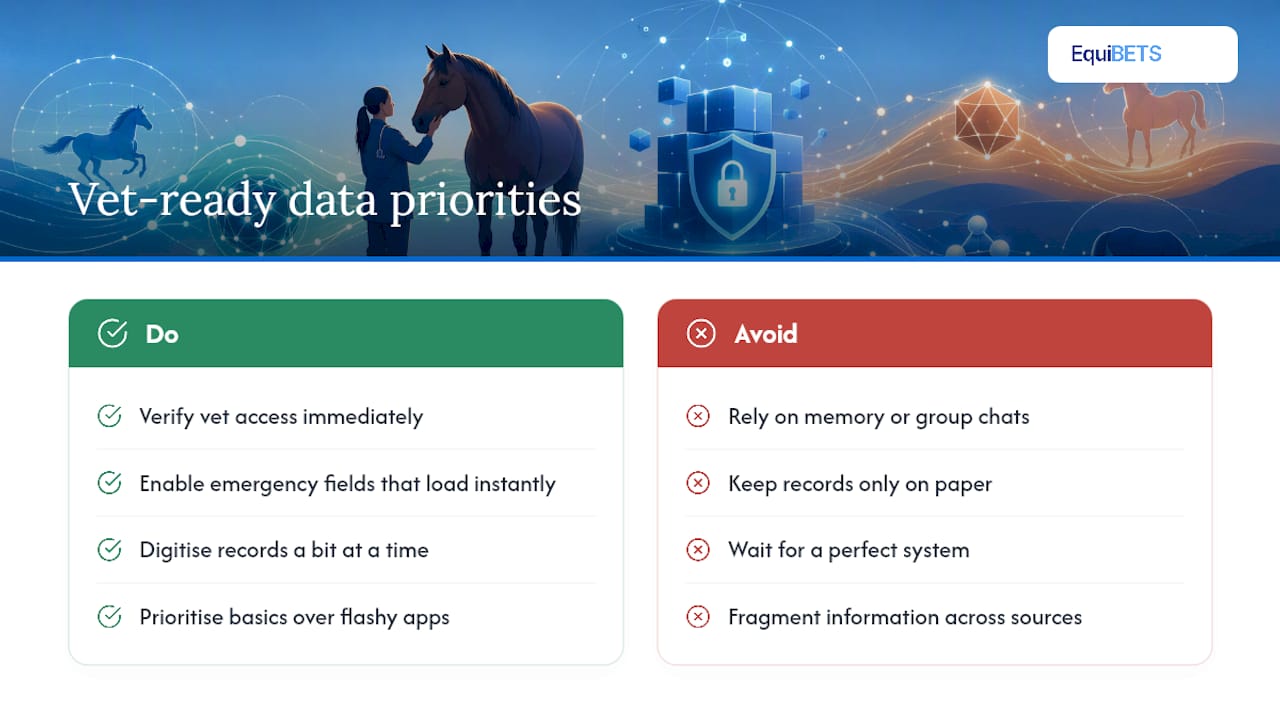
Fragmentation isn't a minor inconvenience. It's a clinical risk. A history split across a paper folder, a group chat, and someone's memory means the next vet on the case is working with less information than they think they have, and that gap tends to show up exactly when it matters least: in an emergency, at a sale, or during a referral.
The priority isn't a flashier app. It's getting the basics right: verified vet access, emergency fields that load instantly, and a yard willing to digitise records a few at a time rather than waiting for a perfect system.
— isaac
Get vet-ready horse records without the paperwork chase
A specialised equine management platform offers vets a verified portal where vaccination history, medications, and emergency contacts can be accessed promptly before arriving at the yard.

Such platforms typically include features covered in this guide as non-negotiable: role-based vet portals, audit trails tied to a named clinician, offline mobile access for areas with no signal, and GPS-tagged movement data that adds clinical context to a lameness workup. Yards benefit from having an emergency plan intended to be usable in a crisis, and vets can obtain read access without extended administrative delays.
If you're a vet or clinic wanting to see how it works in practice, start with the Equibets platform or check how it fits a professional yard through Stable Manager. Pricing and trial details are on the Equibets pricing page, with everything included in one plan.
Core registries and guidance worth bookmarking
- Equine Register Chipchecker — microchip lookup for UK-registered horses.
- Gov — legal deadlines and owner obligations.
- AAEP case referral guidelines — professional standards for record transfer.
- NexoLab electronic clinical records guide — international perspective on EMR practice.
Sources
- HorseBook — Equine veterinary records guide
- Equine Register — Chipchecker
- Gov
- AAEP — guidelines for equine veterinary case referral
FAQ
Is there a free API for horse racing data?
Some racing bodies and data providers offer limited free feeds for race results and form, but comprehensive veterinary or health data APIs are typically restricted to verified professionals or paid partners.
Is there a veterinary database for horses?
Yes. National systems like the Central Equine Database let authorised vets look up a horse by microchip to check vaccination records, controlled drug logs and identity, and practice-level platforms like Equibets hold the day-to-day clinical record alongside it.
What is the 1/2/3 rule in horses?
This isn't a standardised veterinary or welfare rule with one agreed definition, so treat any version you see online with caution rather than as clinical guidance.
Can I request my horse's medical records?
Owners can generally request copies of their horse's veterinary records from the treating practice, and the AAEP recommends full history transfer at sale so continuity of care isn't lost between vets.
How fast should emergency horse data be accessible?
Immediately, with no login delay. A synced emergency card covering current medications, allergies, and after-hours contacts should be readable within seconds during a crisis.