
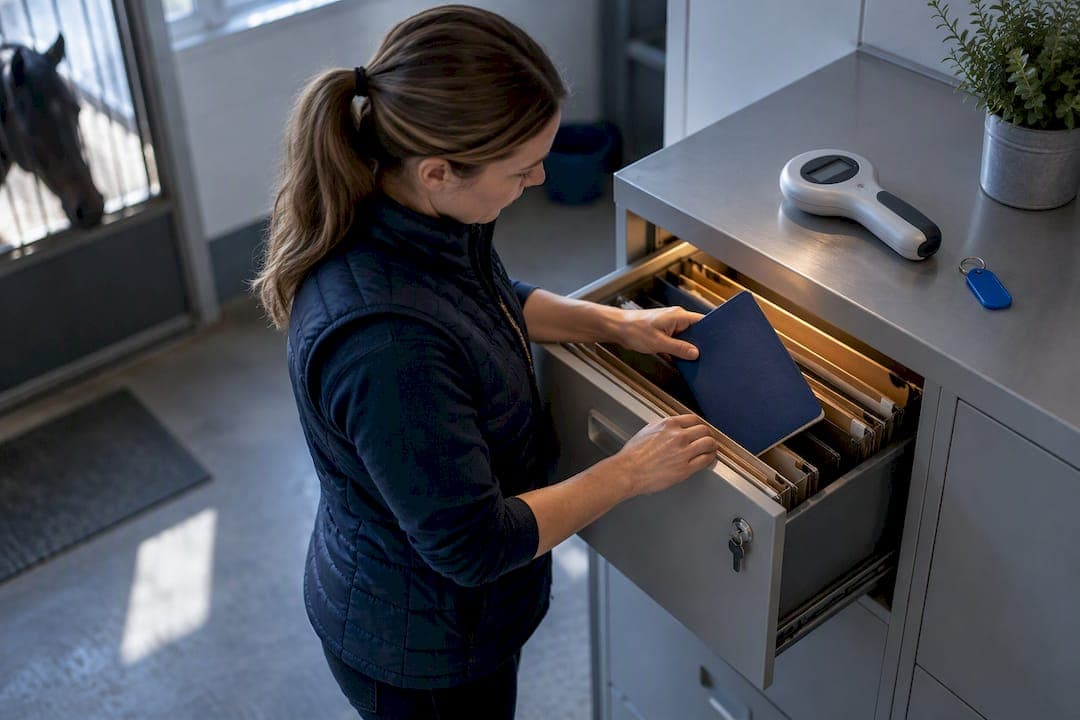
Treat horse health records and owner details as sensitive personal data, not routine paperwork. The single highest-priority move is enabling strong access controls, ideally multi-factor authentication with least-privilege permissions, alongside an auditable record of who accessed what and when. Everything else in equine data privacy, from consent wording to breach reporting, builds on that foundation.
TL;DR:
- Access controls like multi-factor authentication and least-privilege permissions are the top priorities for safeguarding horse and owner data.
- Sensitive information includes owner details, payment records, veterinary notes, GPS logs, and identity documents, all requiring tighter security.
- Data should be retained only as long as needed, with veterinary records kept during the horse's stay plus a safety margin, and CCTV footage limited to 30 days typically.
- Breach response must be prompt, with containment, assessment, and regulator notification within 72 hours, and communication with impacted owners.
- Small yards benefit most from basic security practices, such as regular permission reviews and encrypted data, while larger clinics need more formal impact assessments and audits.
Table of Contents
- What equine data privacy actually covers
- How yards collect data, and the legal basis for doing it
- Security controls that matter for equine data
- Retention rules and building privacy in from the start
- Handling access, erasure and portability requests
- What to do in the first 72 hours after a breach
- How a yard platform puts these controls into practice
- Small yards versus professional clinics: different priorities, same principles
- Getting the operational side right with EquiBETS
- Sources
- FAQ
What equine data privacy actually covers
Equine data privacy is the practice of protecting personal and horse-related information collected by yards, vets, breeders and trainers, covering everything from owner contact details to veterinary diagnoses and GPS ride logs. Most people in the industry underestimate how much of what they hold counts as personal or sensitive information under standard data protection frameworks.
A typical professional yard collects far more than a client list. Here's the range you're likely sitting on right now:
- Owner personal data: names, addresses, phone numbers, emergency contacts
- Payment information: bank details, invoices, direct debit records
- Horse identity documents: microchip numbers, passport scans, breeding papers
- Veterinary and health records: treatment history, medication logs, vaccination status
- GPS and ride telemetry: location data, movement patterns, training analytics
- Images and CCTV footage from stables, arenas, or transport
- Staff records: contracts, next-of-kin details, disciplinary notes
Health and performance data crosses into "special category" territory in stricter regimes once it's linked to an identifiable owner or handler, particularly when combined with location tracking or profiling analytics. A horse's vet notes on their own are sensitive; a horse's vet notes cross-referenced with its owner's home address and financial history is a much bigger liability if it leaks.
Passport scans, microchip numbers and full medical notes deserve separate handling from general admin files. These are the records most likely to enable identity fraud or targeted theft if they end up in the wrong hands, so they need tighter access limits than your general client database.
How yards collect data, and the legal basis for doing it
You don't need a law degree to get this right, but you do need to know which legal basis applies to which activity. Four bases cover almost everything a yard does:
- Contract: you need the owner's address and horse details to deliver livery or training services.
- Legal obligation: passport and microchip records exist because regulation requires them.
- Consent: marketing emails, photo use on social media, or enrolling a horse in a research study.
- Legitimate interest: CCTV for security, or sharing basic health flags with a locum vet covering a shift.
Explicit consent becomes necessary whenever health data is used beyond direct care, think academic research, insurance underwriting, or sharing footage publicly. Record that consent properly: date it, note what was agreed, and keep the record somewhere you can retrieve it if a client asks what they signed up for.
A workable privacy notice for owners and staff doesn't need to be a legal essay. It should state what data you collect, why, how long you keep it, who it's shared with (vets, insurers, farriers), and how someone can ask a question or raise a concern. Keep it on the intake form, not buried in a separate document nobody reads.
Security controls that matter for equine data
Most breaches in small businesses don't come from sophisticated hacking. They come from a shared login, an unpatched laptop, or a departing staff member whose access was never revoked. Here's what actually moves the needle:
- Require multi-factor authentication on every account handling client or health data, and prioritise phishing-resistant options over SMS codes where your systems support them, a priority the NIST guidance on multi-factor authentication sets out clearly for small businesses.
- Apply least-privilege access. A groom doesn't need financial records; a bookkeeper doesn't need full veterinary histories.
- Encrypt data at rest and in transit, and keep devices patched, especially phones and tablets used in the field.
- Use secure offline sync procedures for apps used away from Wi-Fi, so cached data on a device isn't sitting unprotected until it reconnects.
- Maintain tested backups and a genuine audit trail, not just a backup that's never been restored to check it works.
- Limit exports and copies. Every spreadsheet download is a new copy of sensitive data sitting outside your controlled system.
- Vet your software suppliers. Ask where data is hosted, who can access it, and what their breach process looks like.
- Train staff on phishing and password hygiene, and use a password manager rather than shared logins scrawled on a whiteboard.
Internal access failures are a bigger risk for equine businesses than external hacking in most cases. Someone leaves the yard, keeps their login, and nobody notices for months.
Pro Tip: Set a calendar reminder to review who has access to your management system every quarter. It takes fifteen minutes and closes one of the most common gaps in equine data security.
Retention rules and building privacy in from the start
Data protection by design means you don't collect more than you need, and you don't keep it longer than it's useful. The EDPB's guidelines on data protection by design and by default frame this as a legal expectation, not a nice-to-have: default settings should be private, and pseudonymisation should be used wherever it doesn't get in the way of the job.
Retention doesn't need to be complicated, but it does need to be written down. A rough working schedule for a professional yard looks like this:
- Veterinary records: keep for the duration of the horse's time at the yard, plus a defined period after departure for continuity of care.
- Payment records: retain per your local tax retention requirement, then delete.
- Owner contact details: delete or archive within a set period after the relationship ends, unless a legal reason requires longer retention.
- CCTV footage: a short rolling window, typically 30 days, unless an incident requires it to be preserved longer.
Practical design steps worth adopting immediately: set new accounts to the most private default, use pseudonymised horse or owner identifiers where staff don't need to see full names to do their job, and resist the urge to export full databases "just in case." Every unnecessary copy is a new risk you've created for no operational benefit.
Handling access, erasure and portability requests
When an owner asks what data you hold on them, or asks you to delete it, you need a process, not a scramble. Here's a workable sequence:
- Verify identity before releasing anything. A request via a personal email you don't recognise is worth a second check.
- Scope the request. Are they asking for everything, or a specific record like vaccination history?
- Search your systems, including backups and any shared drives, not just the primary database.
- Apply exemptions where legitimate, for instance, retaining data needed to defend a legal claim or meet a regulatory retention requirement.
- Log the response, including what was provided, withheld, and why.
Aim to respond within a reasonable timeframe, most organisations target around a month, though this isn't formal legal advice and your obligations depend on your jurisdiction. Requests involving veterinary records get more complex when a third party, like an insurer or referring vet, also holds an interest in that data. In those cases, share what's within your control and point the owner toward the other data holder for the rest, rather than trying to speak on their behalf.
What to do in the first 72 hours after a breach
A breach doesn't wait for you to feel ready. The moment you suspect one, contain it: change compromised passwords, isolate affected systems, and preserve logs rather than deleting anything in a panic.
- Attempt safe recovery from tested backups rather than paying a ransom or guessing at a fix.
- Assess the likelihood of harm to affected owners, staff, or third parties, and document what you find as you go.
- Decide on regulator notification. If a breach is likely to cause real harm, notify the relevant authority without undue delay, and the ICO's guidance on responding to a personal data breach sets the benchmark at 72 hours where feasible.
- Communicate plainly with affected owners and staff: what happened, what data was involved, and what you're doing about it.
- Once contained, review what failed and fix it, whether that's a password policy, a vendor contract, or a training gap.
The 72-hour window isn't about having every answer. It's about reporting known facts promptly and following up as the picture becomes clearer.
How a yard platform puts these controls into practice
The gap between knowing what you should do and actually doing it consistently is where most yards fall down, which is why the operational side matters as much as the policy. A platform built for professional yards can embed these principles rather than leaving them to memory and goodwill. EquiBETS uses a five-year audit trail so accountability and clinical continuity don't depend on someone remembering to log a change manually.
Offline-first capture matters too: forms filled out in a field with no signal sync securely once connected, rather than sitting exposed on a device indefinitely. Read more on how offline horse forms reduce that exposure window.
Role-based access and owner portals also do double duty. They satisfy transparency obligations, owners can see what's recorded about their horse, while keeping staff limited to only the records their role actually requires.

Small yards versus professional clinics: different priorities, same principles
A five-horse livery yard and a referral hospital face the same rules but very different risk profiles, and pretending otherwise wastes effort where it isn't needed.
Small yards get the most value from the basics done well: MFA on every account, tested backups, a one-page privacy notice, and retention periods that default to short. Trying to build a formal impact assessment process before you've locked down logins is effort spent in the wrong place.
Larger clinics and yards running analytics or GPS profiling face a different bar. A data protection impact assessment becomes worthwhile once you're combining health telemetry with performance data at scale, and vendor audits and a written incident response plan stop being optional. The most common mistake in this bracket isn't lack of policy, it's policy that exists on paper but nobody has tested against a real scenario.
— isaac
Getting the operational side right with EquiBETS
Most yards don't fail at data privacy because they don't care, they fail because their tools weren't built with these obligations in mind. Equibets is built specifically for professional yards that need audit trails, secure vet access, offline capture and role-based permissions working together in one place, rather than stitched across five different apps and a paper file.

The stable manager module handles day-to-day yard operations while keeping the same access controls and record history running underneath. If you're currently relying on shared logins, exported spreadsheets, or a filing cabinet for veterinary paperwork, that's exactly the exposure this article has walked through. EquiBETS Complete is available from $9.99 AUD per month, and you can check current plans and start a trial to see how the audit trail and owner portal work for your yard before committing.
Sources
For readers wanting to go deeper than a checklist, the NIST guidance on multi-factor authentication covers practical MFA setup for small organisations. The EDPB's design and default guidelines explain the legal reasoning behind minimisation and pseudonymisation. The ICO's breach response guide walks through the 72-hour notification process step by step. Australian readers should also bookmark the Office of the Australian Information Commissioner for local regulatory guidance. Vets communicating privacy changes to clients may also find value in veterinary-focused marketing support for updating public-facing policies.
This article is general information, not a substitute for advice from a qualified lawyer. Consult a qualified legal professional about your own circumstances before acting on anything here.
- NIST: Multi-factor authentication guidance for small businesses
- EDPB guidelines on data protection by design and by default (Guidelines 4/2019)
- ICO: How to respond to a personal data breach
FAQ
Is horse health data classed as sensitive personal data?
Horse health information becomes sensitive once it's linked to an identifiable owner, particularly when combined with location or financial details. Treat vet records, medication logs and GPS telemetry with the same caution you'd apply to any personal health file.
How long should a yard keep veterinary records?
Keep veterinary records for the duration of the horse's time with you, plus a defined period afterward to support continuity of care if the horse moves elsewhere. There's no single universal number, so set a written retention schedule rather than keeping everything indefinitely.
What's the deadline for reporting a data breach?
If a breach is likely to cause real harm to affected people, notify the relevant regulator without undue delay, aiming for within 72 hours where feasible, as outlined in the ICO's breach response guidance. Document what you know immediately and follow up as details become clearer.
Does EquiBETS help with equine data privacy compliance?
EquiBETS supports privacy practices through features like a five-year audit trail, role-based access, offline secure capture and owner portals that give transparency without oversharing. Pricing for EquiBETS Complete starts from $9.99 AUD per month, with a free trial available before you commit.
What is the biggest privacy mistake small yards make?
Shared logins and unrevoked access after staff leave cause more damage than sophisticated external attacks in most small equine businesses. Enabling MFA and reviewing access permissions quarterly closes most of that gap immediately.