
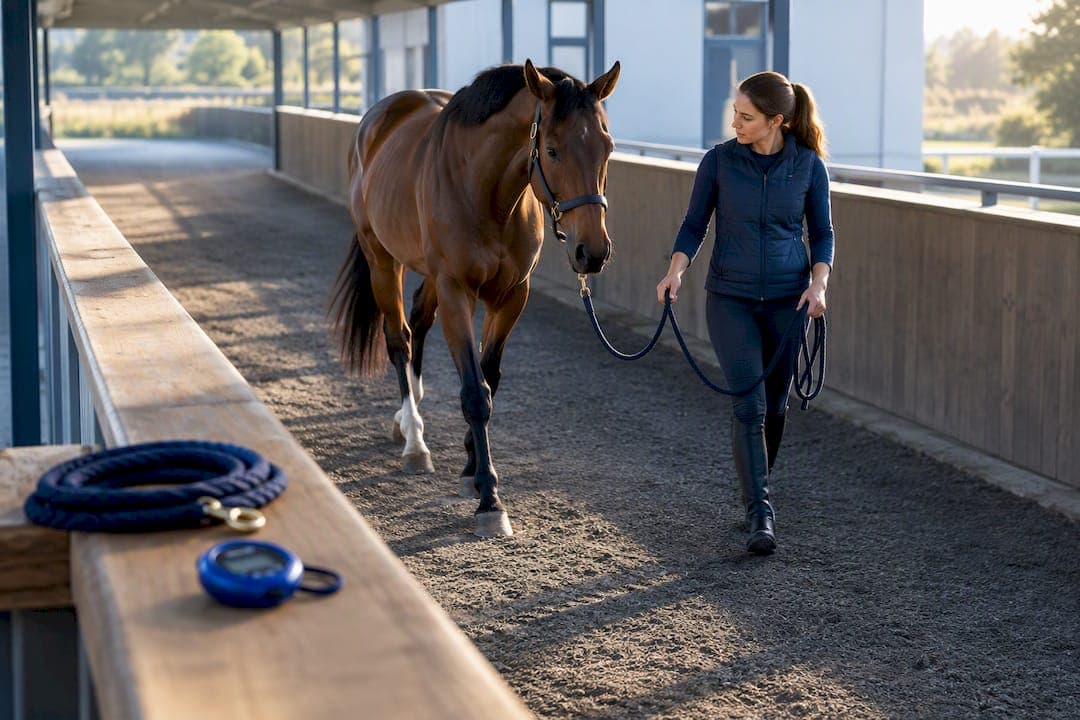
Balance a horse's workload by matching energy intake to its workload band, keeping at least half the ration as long-stem forage, splitting concentrates, managing electrolytes, and tracking recovery so you catch spikes before they cause injury. Today, check body condition score and this week's total exercise minutes. Split any grain meal larger than 0.5% bodyweight and give the gut 2 to 4 hours before hard work. If you see thumps, collapse or signs of severe dehydration, stop work immediately and call a vet.
TL;DR:
- Maintaining at least 50% of the horse's ration as long-stem forage helps support hindgut health during workload increases.
- An acute workload spike higher than an 18% increase over recent weeks significantly raises the risk of injury based on research.
- Increasing energy intake by category rather than small top-ups is essential when shifting from light to moderate or heavy work.
- A seven-day log tracking session duration, heart rate, appetite, manure, and any symptoms enables early detection of overtraining or health issues.
- Signs such as collapse, severe dehydration, or persistent sweating demand immediate veterinary intervention instead of workload adjustments.
Table of Contents
- How do you assess a horse's current workload and warning signs?
- How should you adjust nutrition as workload changes?
- What does safe training progression and recovery actually look like?
- What does a practical weekly monitoring template look like?
- Why consolidated records make these decisions more reliable
- Where owners and yards most often go wrong
- Get organised feed and training records with EquiBETS
- Sources
- FAQ
How do you assess a horse's current workload and warning signs?
Workload has two sides. External load is what you can see and time: minutes worked, session type, terrain and speed. Internal load is how the horse's body responds: resting heart rate, how quickly heart rate drops after exertion, demeanour and appetite. Both matter, because two horses doing the same session can carry very different internal loads depending on fitness.
A few simple measurements, tracked weekly, tell you most of what you need:
- Total weekly exercise minutes and the intensity of each session (walk, trot, canter, or interval work).
- Body condition score, checked at least monthly and after any workload change.
- Appetite, manure consistency, and resting pulse taken at the same time each day.
The acute:chronic workload ratio, or ACWR, is a practical way to guard against sudden jumps: it compares this week's workload against the average of the past few weeks. Research on eventing horses found that acute spikes in workload raise injury risk, which is why steady, incremental increases matter more than any single big session. If you do not have access to GPS or heart rate monitors, a simple written log of minutes and perceived effort achieves much the same purpose.
Some signs demand immediate veterinary attention rather than a training adjustment: collapse, "thumps" (synchronous diaphragmatic flutter), persistent profuse sweating, colic-like behaviour, or sudden severe lameness. Treat any of these as an emergency, not a note for tomorrow's log.
How should you adjust nutrition as workload changes?
Energy needs do not rise gradually with workload, they step up by category. Oklahoma State University's guidance puts the increase at roughly 20% above maintenance for light work, 40% for moderate, 60% for heavy and 80% for very heavy work. In practice, that means a horse moving from light hacking to moderate schooling needs a genuine jump in daily energy, not a small top-up.
- Increase total feed intake before reaching for more concentrate, and keep at least 50% of the ration as long-stem forage to protect hindgut function.
- Where energy needs exceed what forage and moderate concentrate can supply, adding dietary fat or oil is often recommended instead of increasing starch content.
- Cap any single concentrate feed at 0.5% of the horse's body weight and split larger totals across two or three meals, as the University of Nebraska's feeding guidance recommends. For a 500 to 600 kilogram horse, that ceiling sits at roughly 2.5 to 3 kilograms of concentrate per meal.
- Allow 2 to 4 hours between a grain meal and high-intensity exercise, and never restrict feed for more than 6 to 12 hours before performance.
- Watch for electrolyte depletion during heavy work or hot conditions. Horses can lose up to 10 to 15 litres of sweat per hour in prolonged or hot exercise, and the resulting sodium, potassium and chloride loss can trigger thumps and muscle weakness if not replaced.
Pro Tip: Weigh concentrate feeds rather than scooping by volume: a "scoop" varies enormously between feed types and can push you well past the 0.5% bodyweight limit without you noticing.
What does safe training progression and recovery actually look like?
The safest rule for increasing workload is to change one variable at a time, whether that is duration, intensity or frequency, and to keep weekly increases modest, ideally under 10%. Jumping several variables at once makes it impossible to tell which change caused a problem if one shows up.
ACWR gives this principle a number: it compares the current week's load against the rolling average of recent weeks, and a sharp spike in that ratio has been linked to higher injury risk in studies of eventing horses. A longitudinal study of young Friesian stallions found that an 18% jump in external load over a 10 week programme coincided with reduced fitness and more lameness eliminations, which underlines why gradual build-up beats an ambitious training block.

Recovery is not optional downtime, it is part of the training effect. Guidance on appropriate workloads points out that the body needs adequate repair time to actually adapt to a harder session, so structured rest belongs in the plan rather than being squeezed out when the calendar gets busy.
Step back from planned intensity when you notice:
- Resting heart rate creeping up over several days without an obvious cause.
- Heart rate staying elevated longer than usual after work.
- Reduced appetite, looser or harder manure, or reluctance to move forward.
What does a practical weekly monitoring template look like?
A simple seven day log, kept consistently, catches most problems before they become emergencies. Track session duration, perceived intensity, resting heart rate, appetite, manure quality, a weekly weight or body condition note, and any action taken in response.
For a 500 to 600 kilogram horse moving from light to moderate work, a sample adjustment might look like this: increase total daily intake, keep forage at half or more of the ration, add a measured amount of vegetable oil for extra energy density without more starch, and split the concentrate portion into three feeds rather than two.
- If three consecutive days show elevated resting heart rate or reduced appetite, hold the current workload rather than progressing it.
- If manure consistency changes for more than two days alongside a ration change, revert the most recent adjustment first.
- If signs persist beyond three to four days, or if you see any red flag symptom, call a vet or equine nutritionist rather than adjusting further on your own.
Energy needs rise by roughly 20% per workload category above maintenance according to Oklahoma State University, meaning a horse stepping from light to moderate work needs a genuine second increase, not a top-up of the first.
Why consolidated records make these decisions more reliable
Feed changes, training logs and recovery notes mean far more when you can see them side by side. A resting heart rate that looks fine on its own can flag a problem once it is lined up against last week's grain increase and this week's added canter work, and that kind of pattern is easy to miss across separate paper logs or spreadsheets.
Tools built for this task make the seven day template easier to run without adding admin:
- AI-based movement analysis can flag subtle changes in gait or effort before they show up as visible lameness.
- GPS ride tracking turns "felt like a hard session" into an actual distance, speed and duration record.
- Owner portals let a yard share recovery notes and feed changes with owners in real time, rather than after the fact.
- Nutrition analysis tools help translate a workload band change into a concrete ration adjustment.
- Offline mobile access means the log still gets filled in when the arena has no signal.
A yard could use a shared log to flag a horse whose resting heart rate trended upward over three sessions, prompting a hold on workload before symptoms appeared, or use an owner portal to keep an absent owner informed the same day a feed change was made.
Where owners and yards most often go wrong
Recovery and condition scoring deserve more attention than another hard session. The most common mistake is a fast jump in workload paired with a sudden ration change, done at the same time, which makes it impossible to know what caused the setback. Simple daily monitoring and clear communication between riders, grooms and owners catch problems while they are still small.
— isaac
Get organised feed and training records with EquiBETS
Running a seven day monitoring template by hand works, but it eats time a busy yard rarely has spare. EquiBETS brings training logs, nutrition analysis, GPS ride data and owner updates into one workspace, so a resting heart rate trend or a missed feed adjustment shows up before it becomes a setback.

- Log session duration, intensity and recovery notes in one place instead of across separate spreadsheets and paper diaries.
- Share feed and workload changes with owners through a live portal, without extra phone calls or messages.
- Work offline in the arena or paddock and sync records once you are back in range.
Check EquiBETS Complete pricing or start a free trial to see whether an organised workflow suits your yard.
Sources
- Nutritional concerns for exercising horses | Oklahoma State University
- Basics of Feeding Horses: Feeding Management | University of Nebraska
- A prospective cohort study on the acute:chronic workload ratio in relation to injuries in high level eventing horses
- How to manage severe dehydration and exhausted horse — AAEP/IVIS
FAQ
What is the 1/2/3 rule for horses?
Definitions vary across trainers and yards, so there is no single agreed version of a "1/2/3 rule" backed by extension or veterinary sources. If you have seen it used for feeding or workload progression, check with a vet or equine nutritionist before applying it, since the evidence-based approach is to progress workload gradually and adjust energy intake by category as outlined above.
What is the 20% rule for horses?
It generally refers to the workload-based energy guidance from Oklahoma State University, where energy needs rise by roughly 20% per workload category above maintenance.
What are some good balancing exercises for horses?
Balance and workload management come from progressive, well-structured sessions rather than any single exercise. Alternate intensity across the week, keep at least one lighter or active recovery day after a hard session, and change only one training variable at a time to avoid the sharp workload spikes linked to higher injury risk.
Can you give a horse too much balancer?
Yes, overfeeding any concentrate, including a balancer, risks digestive upset and works against the 0.5% bodyweight per meal limit recommended for concentrate feeds. Follow the product's feeding rate for the horse's actual body weight and workload, and split larger totals into multiple smaller feeds.
How do you know when a horse needs a vet during hard exercise?
Treat collapse, thumps, profuse ongoing sweating, colic-like behaviour or severe lameness as emergencies requiring immediate veterinary care. These signs can indicate the metabolic and electrolyte problems described by the AAEP/IVIS guidance on exhausted horses, which do not resolve with rest alone.