
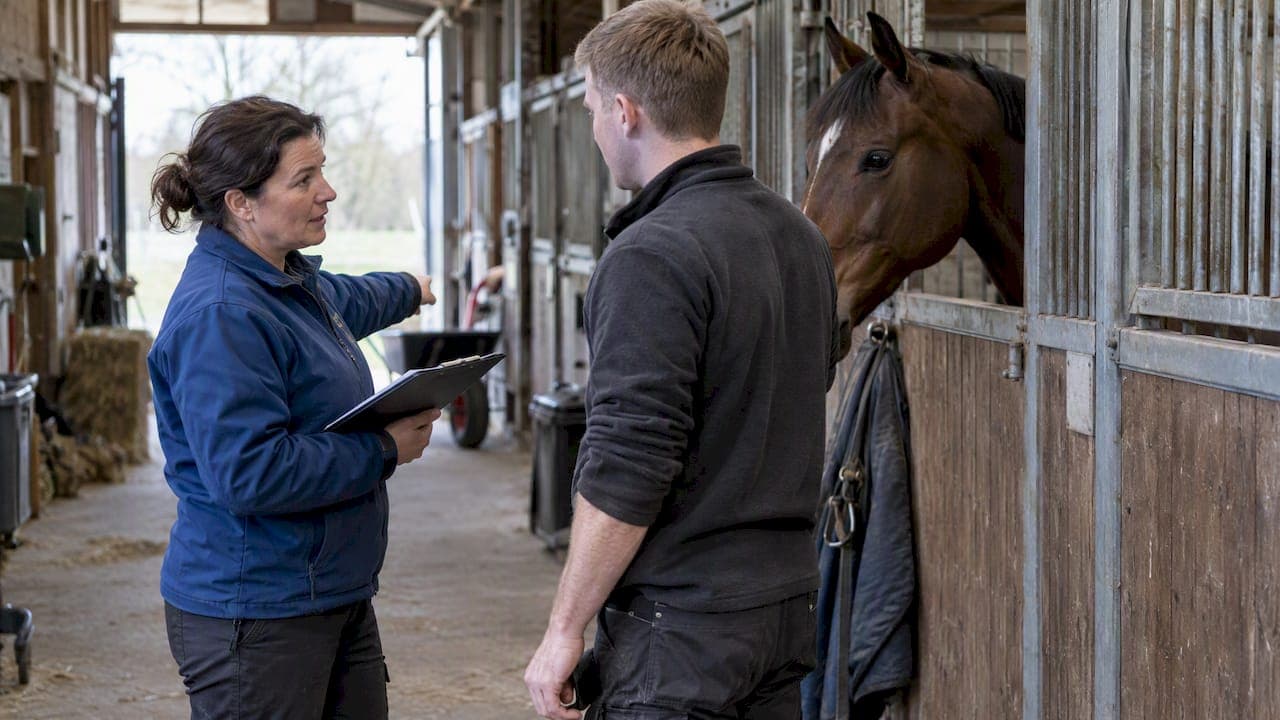
A workable staff communication policy for a stable needs written procedures, one primary communication channel, documented shift handovers with a designated handoff lead, laminated emergency cards backed by a synced digital copy, and clear manager accountability. These elements belong in a short, accessible policy that staff can actually follow during a busy morning feed round or a late-night colic call, not a document that sits unread in a drawer.
TL;DR:
- Each shift’s handoff lead should prepare notes on feed changes, medication, incidents, and pending tasks, then hold a face-to-face exchange and cross-check signatures.
- Allow 10 to 15 minutes for field operators and up to 30 minutes for managers, adding time for inexperienced relief carers or complex treatment plans.
- Use one primary channel for schedules and medication changes, require acknowledgments for critical updates, and set separate routes for routine, urgent, and overnight messages.
- Keep emergency cards with horse IDs, decision maker contacts, vet numbers, medications, and yard coordinates; call the vet first, then the decision maker.
- Track missed medication incidents, emergency time to call the vet, and acknowledgment rates; keep printed copies available where paddock reception is unreliable.
Table of Contents
- Core components every stable policy should include
- Step-by-step shift handover: role, timing, and a simple log workflow
- Choosing and using communication channels: one reliable channel and clear rules
- Emergency notification protocol: what to record and the call order
- Training and supervision: equip managers as communication champions
- Templates and tools: quick-start checklist and ready resources
- Audit, review cadence and simple KPIs
- Getting started without overcomplicating it
- How EquiBETS Complete keeps contacts, logs and permissions in one place
- FAQ
- Sources
Core components every stable policy should include
A written policy only works if it spells out who does what and where information lives. Staff should never have to guess who is authorised to call the vet or update a horse's treatment record.
The policy should cover these areas in detail:
- Roles and responsibilities: name the shift lead, the authorised decision-maker for veterinary calls, relief carers, and whoever is responsible for updating records at the end of each shift.
- Procedures to document: shift handover steps, medication administration notes, visitor and biosecurity logs, and the order in which people are called in an emergency.
- Record management: where laminated copies live (tack room, float), who has permission to edit digital records, and how version control works so outdated information never gets actioned.
Biosecurity deserves its own line in the manual. Staff should be trained in handling techniques and visitor protocols, with new starters supervised until they're confident, a visitors' log kept with contact details, and biosecurity instructions posted where everyone can see them. Folding this into the same policy document means one source of truth instead of three different habits across three different staff members.
Step-by-step shift handover: role, timing, and a simple log workflow
A handover that happens only by word of mouth is a handover that fails the moment someone's in a hurry. Every shift should have a designated handoff lead, someone explicitly accountable for making sure the log is complete and checked before they leave the yard.
The HSE's guidance on shift handover sets out the structure worth copying:
- Prepare the outgoing log before the shift ends, covering feed changes, medication given, any incidents, and tasks still outstanding.
- Run a face-to-face, two-way exchange where incoming staff can ask questions rather than simply reading a note.
- Cross-check and sign so the incoming carer confirms they understand what's being handed over, not just that they received it.
Allow sufficient time for handovers. A risk engineering position paper on shift handover gives typical timings of 10 to 15 minutes for field operators and up to 30 minutes for managers. Flag anything unusual, such as a lengthy absence, an inexperienced relief carer or a complex treatment plan, for extra time and a direct conversation with a manager rather than a rushed note.
Pro Tip: End every handover with a one-line written summary of outstanding actions so nothing relies on memory alone.
Choosing and using communication channels: one reliable channel and clear rules
Scattered communication, a text here, a sticky note there, a voicemail nobody checks, is one of the most common causes of missed information in any workplace. Stables are no exception, and the fix is picking a single primary channel and sticking to it.
- Choose one primary channel, typically a mobile-first app or a designated group, for schedules and medication updates, and use read-acknowledgements for anything critical, a practice Deputy's workforce communication checklist recommends as standard.
- Define separate paths for routine updates, urgent alerts, and after-hours emergencies, so staff always know whether a message needs a reply now or can wait until the next shift.
- Ban ad-hoc texts and sticky notes for anything safety-related: if it matters for a horse's welfare, it goes in the primary channel or the log, nowhere else.
A single channel also makes it obvious when something's been missed. If a critical update sits unacknowledged, a manager can see that immediately instead of assuming it reached someone.
Emergency notification protocol: what to record and the call order
When a horse is in distress, the last thing anyone needs is to hunt for a phone number. An emergency card should sit in every tack room and float, with a synced digital copy available offline.
- Horse ID, including distinguishing features and microchip number where relevant.
- Owner and authorised decision-maker contacts, so someone can approve treatment even if the owner is unreachable.
- Primary and after-hours vet numbers, plus a backup clinic.
- Transporter details, current medications and dosages, and GPS coordinates for the yard or paddock.
These are the fields every horse emergency contacts sheet needs, and the same guidance recommends a fixed call order: the vet first for any clinical incident, then the authorised decision-maker, then the transporter if the horse needs to move. Naming a single caller for each incident avoids the confusion of two people ringing the same vet with conflicting details.
Documenting treatment preferences and budget limits ahead of time prevents delays in a crisis, according to the British Horse Society's emergency plan guidance, which also recommends clear notification thresholds so vets aren't called for every minor scrape but are never missed for anything serious. Review the whole contact list annually, and immediately after any staff or vet change.
Training and supervision: equip managers as communication champions
Staff tend to trust their immediate supervisor more than any memo or app notification. That makes training for managers just as important as the policy document itself.
- Train shift leads and supervisors in running a consistent message cascade, with clear talking points so every staff member hears the same version of events.
- Build short, regular feedback channels, such as an end-of-week check-in, and show staff that feedback actually changes something, not just that it's been logged.
- Include communication skills as a selection criterion for shift-lead and supervisor roles, with on-the-job coaching and periodic refreshers.
Immediate supervisors are consistently the most trusted source of information for non-desk staff, and clear, frequent communication from them measurably improves satisfaction and reduces turnover risk. For practical message-cascade techniques during a crisis, Leaderly's guidance on crisis communication is a useful reference for coaching new supervisors.
Pro Tip: Ask one new question at every feedback session, "what nearly went wrong this week?" surfaces more than "any issues?" ever does.
Templates and tools: quick-start checklist and ready resources
Writing the policy is the easy part. Getting staff to use it daily depends on templates that are quick to fill in and easy to find.
- A one-page emergency card with a header (yard name, GPS coordinates), a horse ID block, a contacts block, and an action strip, laid out exactly as described in our emergency contacts sheet guide, with laminated copies in the tack room and float.
- A shift-handover log capturing what happened, why it mattered, what's still outstanding, and a signature from both outgoing and incoming staff, built around the structure in our shift-handover notes template.
- A digital option for both, kept centralised with offline access, so relief staff or a locum vet can see what they need without full account access.
Assigning limited, role-based permissions means a vet reviewing a treatment history doesn't also see finance records or unrelated horses' files.
Audit, review cadence and simple KPIs
Review emergency contacts annually and after any staff change, and spot-check handover logs regularly rather than waiting for something to go wrong. Audit for completeness of entries, how quickly critical updates get acknowledged, and accuracy of medication records against what was actually given.

A few simple KPIs tell you whether the policy is working: missed-medication incidents, time-to-call-vet in emergencies, and the staff acknowledgement rate for critical messages.
Getting started without overcomplicating it
Start small. Pick a laminated emergency card and a handover log, test them, and see what breaks before rolling the system out across the whole yard.
Possible barriers include patchy mobile reception in paddocks and owners who prefer a phone call over an app notification. Printed backups in the tack room and a signed-authorisation go-bag for transport emergencies cover both without adding complexity to the daily routine.
— isaac
How EquiBETS Complete keeps contacts, logs and permissions in one place
We built EquiBETS Complete to help yards manage horse records and coordinate their teams in one workspace, with offline access.
- We provide offline access to EquiBETS Complete when paddock reception drops out.
- We help yards coordinate their teams in EquiBETS Complete.
- We help yards coordinate their teams in EquiBETS Complete, so nothing relies on a verbal note at the gate.

A free trial gives you room to test this against your own yard's routine before committing. Visit EquiBETS Complete to see the plan and get started this week.
FAQ
What should a stable's staff communication policy include?
It should name roles and responsibilities, set out a single primary communication channel, document a shift-handover procedure with a designated handoff lead, and store emergency contacts both on laminated cards and in a synced digital copy. Keep it short enough that staff reference it during a shift rather than only at induction.
Who should lead a shift handover at a stable?
A designated handoff lead for each shift, someone explicitly accountable for completing the log and confirming the incoming carer has reviewed it. The HSE's shift-handover guidance recommends preparation, a two-way exchange, and cross-checking rather than a verbal-only update.
How long should a shift handover take?
Allow sufficient time for handovers. A risk engineering position paper on shift handover gives typical timings of 10 to 15 minutes for field operators and up to 30 minutes for managers. Flag anything involving an inexperienced carer or a complicated treatment for extra time.
What should be on a horse emergency contact card?
At minimum: horse ID, owner and authorised decision-maker contacts, primary and after-hours vet numbers, transporter details, current medications and dosages, and GPS coordinates. Our emergency contacts sheet guide sets out the full field list and a call order to avoid duplicated calls.
How often should a stable review its communication policy?
Review emergency contact lists annually and immediately after any staff change, and spot-check handover logs monthly. Regular review keeps the policy matched to who's actually on the roster rather than who was there last year.