
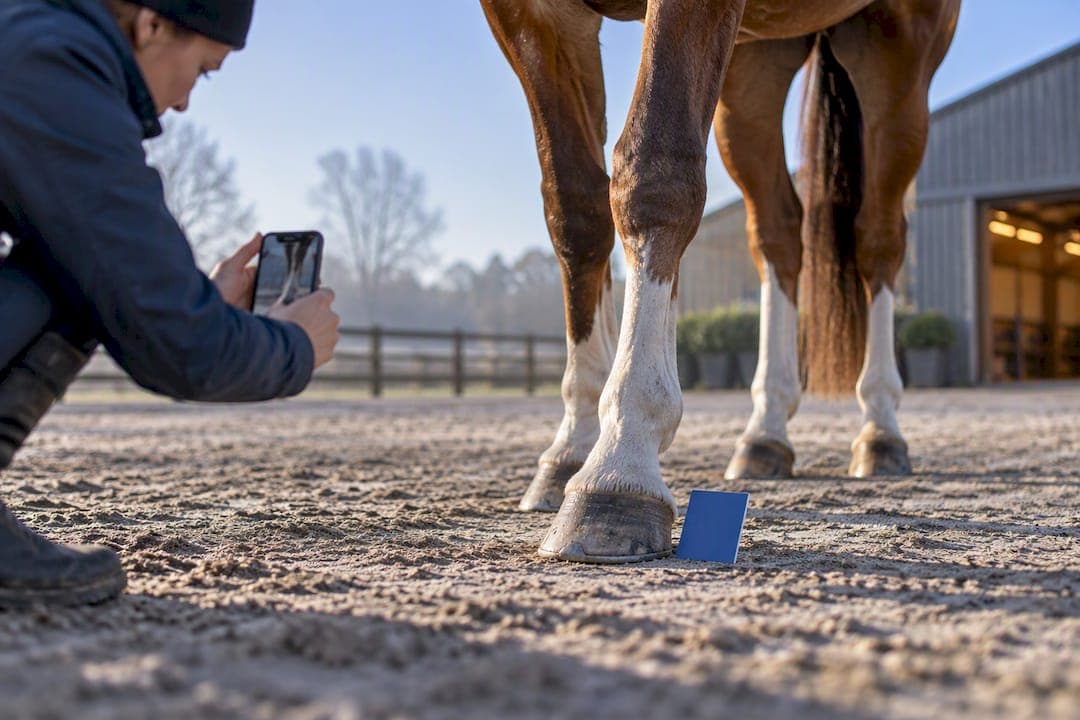
A useful clinical photo record for a horse is a standardised set: one wide contextual shot, one mid-distance orientation shot, and one close-up detail shot with a scale reference. Capture that set now for any wound, lameness case or rehab check, label it immediately, and upload it to a secure yard record. Photos support a vet's assessment; they never replace an in-person exam.
TL;DR:
- Consistent three-shot photo sequences, including wide, mid-distance, and close-up with scale, are vital for tracking wound or lameness progress.
- Label every image with horse ID, date, body region, clinical notes, and load status before uploading to a secure, encrypted system.
- Photos should be linked to a rehabilitation timeline, recording current progress, exercise level, and scheduled recheck dates for meaningful tracking.
- Use stable, fixed camera setups with a scale and consistent distance; consider specialized equipment for complex wounds needing precise measurement.
- Follow legal and ethical protocols by obtaining owner consent, using secure upload methods, and deleting local copies after successful storage.
Table of Contents
- Step-by-step photo protocol for wounds, lameness and rehab progress
- Labelling, metadata and secure storage for horse photos
- Legal, consent and telemedicine cautions for sharing horse photos
- Linking photos to rehabilitation plans and rechecks
- Equipment and objective measurement for wound monitoring
- Ready-to-use checklist: capture, label, upload, notify
- Why photos deserve a place in the medical record
- How a yard management platform handles this workflow
- Sources
- FAQ
Step-by-step photo protocol for wounds, lameness and rehab progress
A repeatable capture sequence matters more than expensive gear. The BEVA primary care wound management guideline notes that photographs support documentation but do not replace clinical assessment, largely because veterinary evidence for wound care remains limited and much guidance still draws on human wound literature.
Follow the same three-shot sequence every time:
- Wide overview: capture the whole horse or limb in context, showing where the injury sits on the body.
- Mid-distance orientation: step closer to frame the affected area with visible landmarks (a joint, a marking, tack).
- Close-up with scale: fill the frame with the wound or lesion, holding a ruler or laminated scale board flat against the surface.
Shoot in natural daylight where you can, and avoid pointing the camera towards a window or the sun, which silhouettes the detail you need. Brace the phone against a fence rail or use a small tripod rather than relying on a shaky handheld shot. For lameness, film short clips from the front, both sides and behind, at a walk and trot on a flat, even surface.
Consistency between sessions is what makes a photo series useful. Mark a fixed distance and height for repeat shots, and try to photograph the same limb from the same angle each time so a vet can compare week to week rather than guess whether a change in appearance is real or just a different camera angle. The tips for photographing horses for vets from The Horse recommend adequate lighting, sharp focus, both a wide and a detailed view, and a reference object for scale as the practical minimum.
Add extra shots after exercise, immediately after an incident, and at each scheduled recheck, since swelling and gait often change with activity.
Pro Tip: Keep a laminated scale card in the first aid kit so a scale reference is always on hand, even for an unplanned photo at 6 AM.
Labelling, metadata and secure storage for horse photos
An unlabelled photo is close to useless six months later. Attach a short set of details to every image before it leaves your hands:
- Horse ID and yard reference number.
- Date and time of capture.
- Handler name who took the photo.
- Body region affected (near fore, off hind, poll, and so on).
- Short clinical note (swelling, discharge, lameness grade if known).
- Exercise or load status (rested, hacked, lunged, ridden that day).
A simple file naming convention keeps things searchable without special software: yardID_horseID_YYYYMMDD_bodyregion. Store photos in an encrypted cloud system or clinic portal rather than a personal camera roll, and use offline-first forms in the field when reception is patchy, syncing once you're back in range. Good equine medical records management tools keep an audit trail of who uploaded what and when, which matters for insurance and incident review. Once an image is uploaded, delete the local copy from the phone and retain the file according to your yard's or clinic's record retention policy.
Legal, consent and telemedicine cautions for sharing horse photos
Photos are information for the veterinary team, not a diagnosis. The AAEP's telemedicine ethics guidance makes clear that whether a vet can advise remotely from images depends on the existing veterinary-client-patient relationship and the rules of the jurisdiction involved, so a photo sent cold to an unfamiliar practice carries different weight than one sent to a horse's regular vet.
A few practical rules protect everyone involved:
- Get informed consent from the owner before photographing, and note what the images will be used for (clinical notes, training records, research).
- Send images through a clinic-authorised encrypted portal or a secure yard system rather than a personal messaging app.
- Delete local device copies once the upload is confirmed, and record that deletion as part of your file handling.
These steps mirror standard clinical procedure elsewhere in health care, where formal wound photography procedures require consent, authorised devices and secure upload before deletion from personal equipment.
Linking photos to rehabilitation plans and rechecks
A photo without a rehab context is just a picture. Structure each image around the case timeline, not just the calendar date:
- Record the current rehab phase (box rest, controlled walking, ridden work) alongside the image.
- Note the exercise prescription in place at the time of capture, since load changes often precede visible change.
- Attach the next recheck date so anyone reviewing the file later knows what happens next.
A 2024 review of equine rehabilitation and physical therapies found that photo records work best when tied to exercise level, clinical observations and scheduled rechecks rather than kept as loose, unlabelled files. Standardise progress shots at planned intervals and after any change in workload, since that's when meaningful change is most likely to show.
Keep clinician-facing notes clinical and specific (swelling grade, discharge colour, gait score), and keep owner-facing updates plainer and reassuring, without the raw detail that might distress someone unfamiliar with wound appearance. Serial images taken this way remove a lot of ambiguity from decision points, and rehab tracking built into yard software can flag a recheck automatically once the next milestone falls due.
Equipment and objective measurement for wound monitoring
A phone camera covers most day-to-day needs, but the setup matters:
- Brace the phone on a tripod or against a fixed surface, and hold it perpendicular to the wound rather than at an angle.
- Include a sterile ruler or scale card in every close-up.
- Keep distance from the wound consistent across sessions so size comparisons are meaningful.
For wounds that are complex, slow to heal, or part of a formal case series, phone photos may not be precise enough. A study comparing a laser beam wound camera against digital photoplanimetry found the laser camera gave more accurate area and depth measurements and better agreement between different operators, which matters when tracking a wound over many weeks or contributing to research-quality records. Weigh the cost of that equipment against how much precision the case actually needs. Most routine wounds don't need it.
Pro Tip: Disinfect any camera equipment, tripods and scale boards between horses to avoid carrying infection from one wound to the next.

Ready-to-use checklist: capture, label, upload, notify
Pin this sequence near the tack room door:
- Capture the wide overview shot.
- Capture the close-up detail shot with scale.
- Label with horse ID, date, region and note.
- Upload to the secure yard record.
- Delete the local copy from the device.
- Notify the clinician or owner as needed.
Assign one person per shift to capture, one to upload, and confirm who is responsible for notifying the vet or owner so nothing sits unsent.
Why photos deserve a place in the medical record
Consistent photo workflows cut down the back-and-forth with vets, who can review a well-labelled series in seconds instead of asking for a better shot. They also give owners a clearer, calmer picture of a horse's progress than a phone call alone can. None of this replaces a vet's hands-on judgement, so keep your practice collaborative and your consent records straight.
— isaac
How a yard management platform handles this workflow
Building this protocol by hand with folders and phone albums works for a while, then falls apart the first time someone changes phones. EquiBETS was built for yards that need this to hold together without extra admin.

- Secure, encrypted horse records that keep photos, notes and rehab milestones in one file per horse.
- Owner portals so updates reach the right person without a messaging app.
- Offline-first mobile forms that sync once you're back in range, useful for photos taken out on the property.
- An audit trail showing who uploaded what and when, and structured vet access for sharing records securely.
If you'd rather have this ready to go than build it yourself, EquiBETS Complete runs $9.99 per month and covers the whole workspace, or take a look at the stable manager tools built for exactly this kind of daily record-keeping.
Sources
For the clinical and legal detail behind this guide, read the BEVA wound management guideline, the AAEP's telemedicine guidance, and The Horse's photo advice, and follow your local telemedicine and record-keeping rules.
- 5 tips for taking photos to send to your equine veterinarian – The Horse
- BEVA primary care clinical guidelines: Wound management in the horse
- Ethics, telemedicine and the equine veterinarian – AAEP
- Comparison of a new laser beam wound camera and a digital photoplanimetry-based method for wound measurement in horses - The Veterinary Journal
FAQ
What should be in a basic horse wound photo set?
A wide shot showing the whole limb or body for context, a mid-distance shot for orientation, and a close-up with a ruler or scale card for size reference. The BEVA wound guideline treats this as supporting documentation, not a substitute for a hands-on exam.
Can a vet diagnose a horse from photos alone?
Often not fully. The AAEP's telemedicine guidance notes that remote advice depends on an existing veterinary-client-patient relationship and jurisdictional rules, and photos are treated as information for the vet rather than a definitive diagnosis.
How often should progress photos be taken during rehab?
At each planned recheck and whenever exercise load changes, since that's when meaningful change is most likely to appear. A 2024 rehabilitation review found photo records work best when tied to exercise level and recheck dates rather than taken at random.
Do I need special equipment to measure a wound accurately?
A phone camera with a scale reference covers most routine cases. For complex or slow-healing wounds, a laser beam wound camera gave more accurate area and depth measurements than digital photoplanimetry in one comparison study, so escalate to specialist tools when precision genuinely matters.
Where should horse medical photos be stored?
In an encrypted clinic portal or secure yard record system with an audit trail, not on a personal phone or messaging app. Delete local device copies once the upload is confirmed, and retain files according to your yard's record policy.