
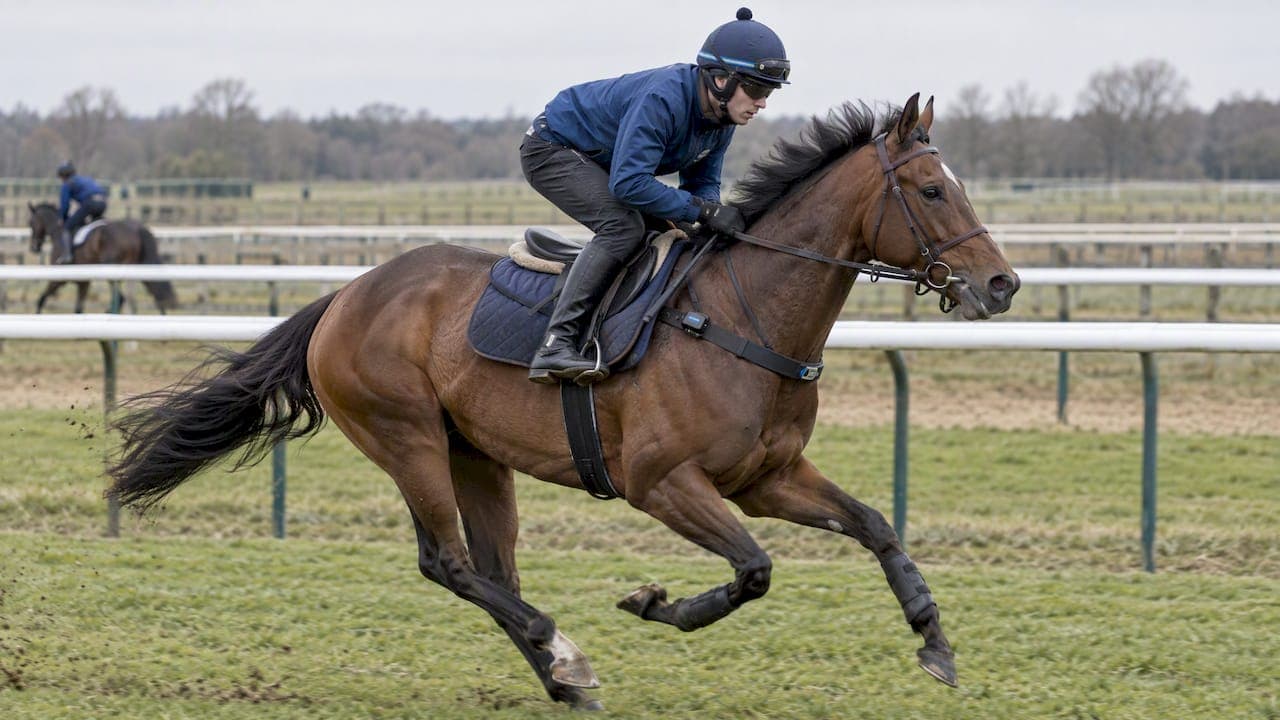
Training load is the measurable external work a horse does (distance, speed, time at gait, jump effort) combined with the horse's internal physiological response to that work. For professional yards, the first practical step is to start objective daily monitoring this week, GPS plus heart rate plus a simple session log, rather than relying on feel. Consistent data lets you spot dangerous spikes before they become injuries and plan progression with confidence.
TL;DR:
- Pair GPS distance and speed with heart rate; add an inertial sensor when jump effort matters, because identical rides can impose different physiological loads.
- Use high speed distance in ACWR because an elite eventing cohort linked its spikes to soft tissue injury, but no universal risk cutoff exists.
- Run standardized exercise tests every four to eight weeks, using the same track, speeds, and time of day so environmental changes do not distort comparisons.
- After a hard session or flagged spike, schedule one to two easy days; after a major spike, reduce frequency and duration the following week.
Table of Contents
- External load versus internal load: the metrics worth tracking
- Measuring training load in practice: devices, protocols and data quality
- Reading the numbers: ACWR, iTRIMP and early warning signs
- Adjusting training and recovery after a workload spike
- Putting a monitoring workflow into practice for pro yards
- A stable manager's view on making monitoring stick
- Managing training load day to day with EquiBETS
- FAQ
- Sources
External load versus internal load: the metrics worth tracking
Every training session produces two kinds of information. External load is what you can observe and record directly: duration, distance covered, speed, time spent at each gait, number and height of jumps, and acceleration patterns during a ride. Internal load is how the horse's body responds to that work, captured through heart rate, blood or plasma lactate, and individualised training impulse scores known as iTRIMP, which weight heart rate data against each horse's own fitness profile rather than a generic population band. This distinction matters because two horses doing an identical external session can carry very different internal loads depending on fitness, age and temperament, according to a review of training load quantification methods.
Several derived indices turn raw numbers into something you can act on:
- Weekly cumulative workload: total distance, duration or TRIMP summed across all sessions in a week.
- High-speed exercise (HSE) distance: metres covered above a set speed threshold, the figure most closely tied to soft-tissue injury risk.
- Acute:chronic workload ratio (ACWR): recent load compared with the rolling average over several weeks.
- SET-derived fitness markers: heart rate and lactate values at fixed speeds (commonly referenced as VLA2 and VLA4 thresholds).
Standardised exercise tests (SETs) give you a repeatable fitness checkpoint: the same track, the same speeds, the same conditions, so a change in heart rate or lactate response genuinely reflects a change in fitness rather than noise from a hot day or a different surface.
Measuring training load in practice: devices, protocols and data quality
Most professional yards can cover the essentials with two devices: a GPS unit for distance, speed and route, and a telemetric heart rate strap synced to it. Where jumping or gait analysis matters, an inertial measurement unit (IMU) or accelerometer adds stride and jump-effort detection that GPS alone cannot capture, a combination described in a GPS and heart rate monitoring study in Thoroughbreds, which found the pairing detects higher peak speeds than stopwatch timing does and gives a more detailed daily workload picture than trainer estimates.
A reliable session protocol follows a short checklist:
- Synchronise device clocks before the first ride of the day.
- Fit the heart rate strap with good skin contact and note attach and removal times.
- Record rider or handler name, surface, and weather conditions.
- Mark session start and stop precisely, including warm-up and cool-down.
- Export or sync data the same day to avoid gaps.
Run SETs every four to eight weeks depending on the competition calendar, more frequently in build-up phases, less often once fitness plateaus in a maintenance period.
Pro Tip: Test SETs at the same time of day and on the same track each time, since heat and surface alone can shift heart rate and lactate readings enough to mask a real fitness change.
Watch for missing IMU data after a strap slips or a battery fails, and flag those sessions rather than averaging over the gap, since a false low reading can hide a real spike.
Reading the numbers: ACWR, iTRIMP and early warning signs
ACWR compares a horse's acute workload, typically the most recent week, against its chronic workload, usually a rolling four-week average. A ratio climbing well above 1.0 signals the horse is working harder than its body has adapted to, and a prospective three-year cohort study of elite eventing horses found that ACWR calculated from high-speed distance was statistically associated with soft-tissue injury, with both the current week's and the previous week's ratio linked to injury risk. The finding points to spikes, not absolute volume, as the thing worth watching.
A multi-year cohort study of elite eventing horses found that spikes in the acute:chronic workload ratio of high-speed distance were associated with soft-tissue injury risk, which is why tracking the trend week to week matters more than any single session's total.
iTRIMP earns its place over raw heart rate because the heart rate to lactate relationship varies between individual horses, so a population-wide heart rate band can misclassify a fit horse as under-worked or an unfit one as coping fine, a point raised in research on individualised TRIMP approaches.
Practical patterns to act on:
- A sustained ACWR above the normal range for two or more consecutive weeks.
- A sudden jump in high-speed distance compared with the prior four-week average.
- Resting heart rate creeping upward over several days without an obvious cause.
- SET performance declining at a fixed test speed, suggesting fitness is going backward rather than forward.
- Behavioural reluctance at the start of sessions the horse previously handled without issue.
Adjusting training and recovery after a workload spike
Once monitoring flags a problem, the response should be quick and proportionate rather than dramatic. A few rules keep progression safe without undoing fitness gains:
- Avoid large week-on-week increases in cumulative load; step up volume or intensity gradually against the chronic average, not the previous week alone.
- After a high-intensity session or a flagged spike, schedule 1 to 2 days of low-intensity work or rest before returning to normal training.
- If the spike was significant, reduce frequency and duration for the following week rather than just one session.
- Build a lighter recovery week into every third or fourth week of a training cycle, tapering volume while keeping some intensity to hold fitness.
- Use the next SET result to decide whether to hold the current load or ease back further.
A 70-day intervention study found that reducing frequency and duration, with 1 to 2 days of low intensity or rest after hard sessions, managed overtraining risk without blocking fitness gains, a pattern also seen in longitudinal monitoring of young Friesian stallions, where adjusted programmes with reduced frequency improved fitness compared with the original high-volume schedule, as reported in a study on managing workload increases.
Pro Tip: Treat a recovery week as a fixed part of the plan, not something you only add after a problem shows up. Horses that get scheduled tapering tend to need fewer emergency interventions.
For phased planning across a full season, a phased training plan built around periodisation gives a useful template for spacing these recovery blocks.
Putting a monitoring workflow into practice for pro yards
A workable weekly cycle has three stages: capture, analyse, act. Riders or stable staff capture GPS, heart rate and session notes during each ride. Metrics such as HSE distance, duration and iTRIMP are extracted and rolled into the ACWR calculation automatically, and SET results are reviewed against the trend line. Any horse with a flagged ratio or a declining SET result gets referred to the attending vet before the next hard session.

Roles split naturally: the rider or handler captures data, the trainer interprets weekly trends and plans the next block, the vet consults on flagged horses, and stable admin keeps owners updated through the week.
A short weekly dashboard scan should cover:
- Horses with an ACWR outside the normal range.
- SET trend direction since the last test.
- Resting heart rate changes across the week.
- Jump counts and height for jumping horses.
- Any recent injuries or vet notes tied to a specific horse.
| Workflow stage | Who owns it | Weekly output |
|---|---|---|
| Capture | Rider or handler | Session logs, GPS and HR data |
| Analyse | Trainer | ACWR, SET trend, HSE distance |
| Act | Vet and trainer | Flagged horses, adjusted plan |
For yards without reliable connectivity, offline-first mobile capture avoids the delays that come with syncing data only once back at the office, and owner portals let riders and owners see the same picture without a separate phone call, both covered in more detail in a guide to building a weekly performance benchmarking workflow.
A stable manager's view on making monitoring stick
Objective load data settles arguments that used to run on gut feel, and it gives you a defensible answer when an owner asks why a horse has a lighter week. The real obstacle is rarely the technology, it is getting staff to fit a strap and log a session every single time. Start with one or two horses, run a short weekly data meeting, and let the habit spread once staff see it change a decision, rather than rolling it out to the whole yard at once.
— isaac
Managing training load day to day with EquiBETS
Once a yard commits to tracking training load properly, the daily grind of juggling GPS files, heart rate exports and paper session sheets becomes the real bottleneck. We built our platform to address that problem: AI-powered movement analysis reads session and gait data automatically, GPS ride tracking logs distance and speed without a separate device feed, and an offline-capable mobile app means staff can log a session in a paddock with no signal and have it sync the moment they're back in range.

Owner portals keep owners informed on a flagged horse without a phone call, and the analytics dashboard surfaces ACWR trends and SET history in one place instead of a spreadsheet nobody updates. If this matches the workflow described above, you can try EquiBETS Complete with a free trial before committing to the $9.99 AUD per month subscription.
FAQ
What is the difference between external and internal training load?
External load is the observable work a horse does, such as distance, speed, duration and jump count. Internal load is the horse's physiological response to that work, measured through heart rate, lactate or individualised scores like iTRIMP, as described in a review of training load definitions.
How often should we run standardised exercise tests?
A common approach is every four to eight weeks, more frequently in build-up phases, less often once fitness plateaus, based on guidance in a review of exercise testing in sport horses. The key is testing at the same track, speed and time of day each time for a result you can actually compare.
What ACWR level signals an injury risk?
There is no single universal cut-off, but a three-year cohort study of eventing horses found that higher ACWR values calculated from high-speed distance were statistically associated with soft-tissue injury. A sustained spike above the horse's normal range, rather than one single high number, is the pattern worth acting on.
What should we do immediately after a training load spike?
Scheduling 1 to 2 days of low-intensity work or rest after a high-intensity session or a flagged spike helps manage overtraining risk, with reduced frequency and duration for the following week if the spike was significant, according to a study on managing workload increases. Reviewing the next SET result helps confirm whether the horse is ready to return to normal load.
Can wearable sensors replace manual stopwatch timing?
GPS combined with heart-rate monitoring reliably measures daily workload and detects higher peak speeds than stopwatch timing does; it provides a detailed picture useful to identify training patterns that may predispose to injury, according to a study using GPS and heart rate monitoring in Thoroughbreds. Wearable devices reduce the manual recording error that comes with timing sessions by hand.
Sources
- Review: definitions and methods for quantifying training load in horses
- Prospective ACWR cohort study in eventing horses
- Use of a GPS and heart rate monitoring system to assess training load in Thoroughbreds