
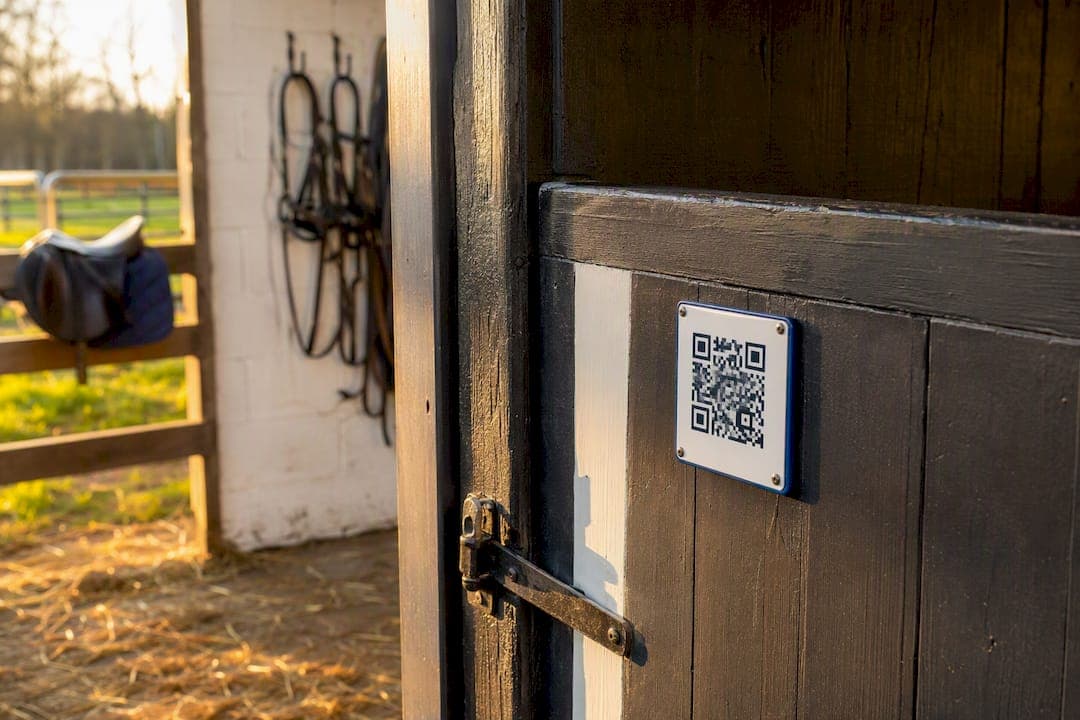
Fix a weatherproof plate to the stall door with a dynamic QR code linking to a short horse profile and emergency contacts. Mount it at eye level, approximately waist to chest height, where anyone walking the aisle can scan without crouching.
Three steps get you there:
- Generate a dynamic QR code (not a static one) through a QR generator or your yard platform
- Link it to a concise profile page with feed, meds, turnout and emergency numbers
- Print onto a weatherproof plate or laminate and mount at eye level on the stall door
Two things make this worth doing. First, anyone on the yard, a locum vet, a relief groom, a competition steward, gets the right information in seconds during an emergency. Second, because the code is dynamic, you update the linked page whenever a medication or feed plan changes and never reprint a plate.
Key Takeaways
Weatherproof plates with dynamic QR codes linked to a maintained horse profile cut emergency response time and remove reprinting costs entirely.
| Point | Details |
|---|---|
| Use dynamic QR codes | Update the linked page whenever medication or feed details change, with no reprinting required. |
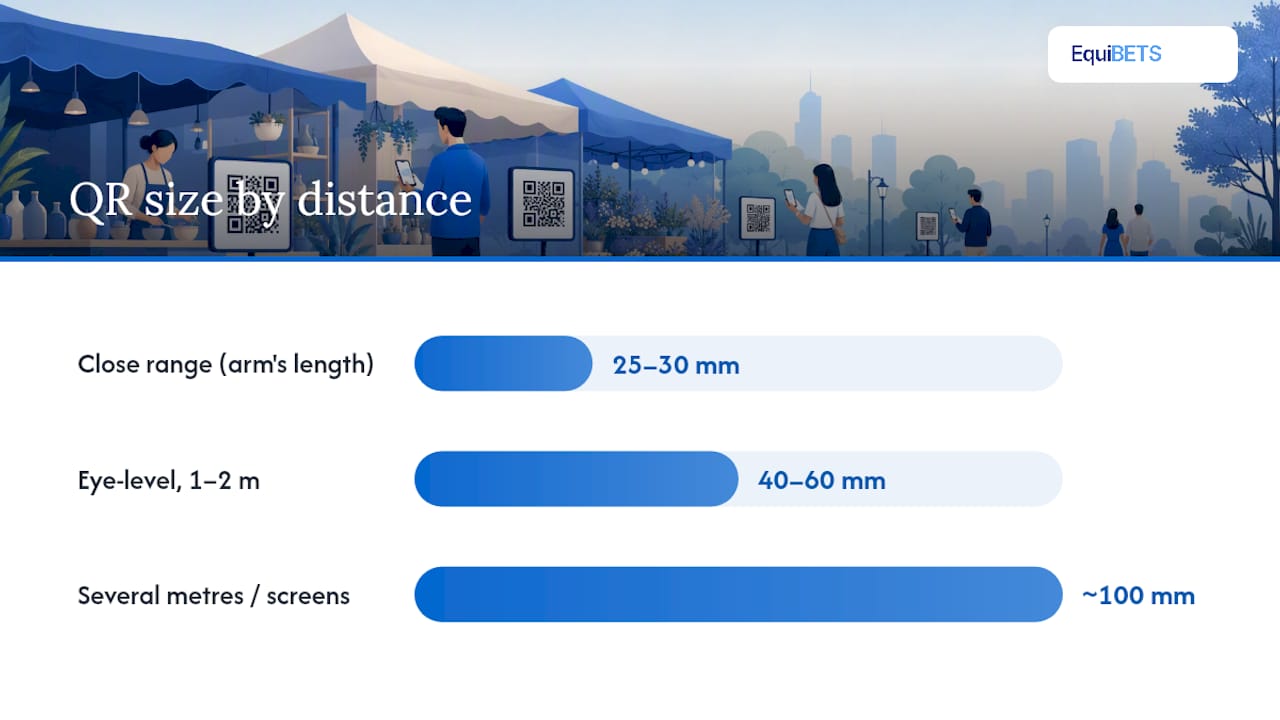
| Size for the viewing distance | Aim for 25 to 30 mm at close range or 40 to 60 mm on eye-level stall plates. |
| Choose weatherproof materials | Engraved metal or UV-stable plastic outlasts laminate in hosed-down, sun-exposed yards. |
| Separate public and private data | Keep tap-to-call numbers public; restrict owner contact details behind a tokenised link. |
| Host profiles on a yard platform | EquiBETS's stable manager keeps linked profiles current and logs every edit automatically. |
Table of Contents
- What are the everyday and emergency benefits of QR stall signs?
- Which materials and mounting options survive a working yard?
- How big should a QR code be on a stall door?
- How do you set up QR stall signs without adding admin?
- How do you keep stall signs accurate and private?
- What do most yards get wrong about QR stall signs?
- Where does EquiBETS fit into your QR sign setup?
- Frequently asked questions
- Sources
What are the everyday and emergency benefits of QR stall signs?
The case for QR code stall signs isn't theoretical. Yards using them report faster handovers and fewer mistakes when someone unfamiliar with a horse needs to act quickly.
- Emergency access. A vet or first responder scans the plate and gets a tap-to-call emergency number without hunting for a phone book or a whiteboard that's out of date.
- Short-term care instructions. A relief groom covering a shift scans the code and sees feed amounts, supplements and rugging needs instead of guessing from a scrawled note.
- Owner visibility and audit trail. When the QR links into a yard management platform, owners see what's logged and when, and you get a record of who updated what.
- Competition day briefs. Temporary carers at a show, a strapper you've never met before, get turnout times and quirks in one scan instead of a rushed verbal handover.
The common thread is speed. A QR code sign placed at a natural pause point, like a stall door, drives action precisely because someone is already standing there with a decision to make.
Which materials and mounting options survive a working yard?
Stall signs get kicked, hosed, chewed at and baked in the sun, so the material choice matters more than it would for an office door.
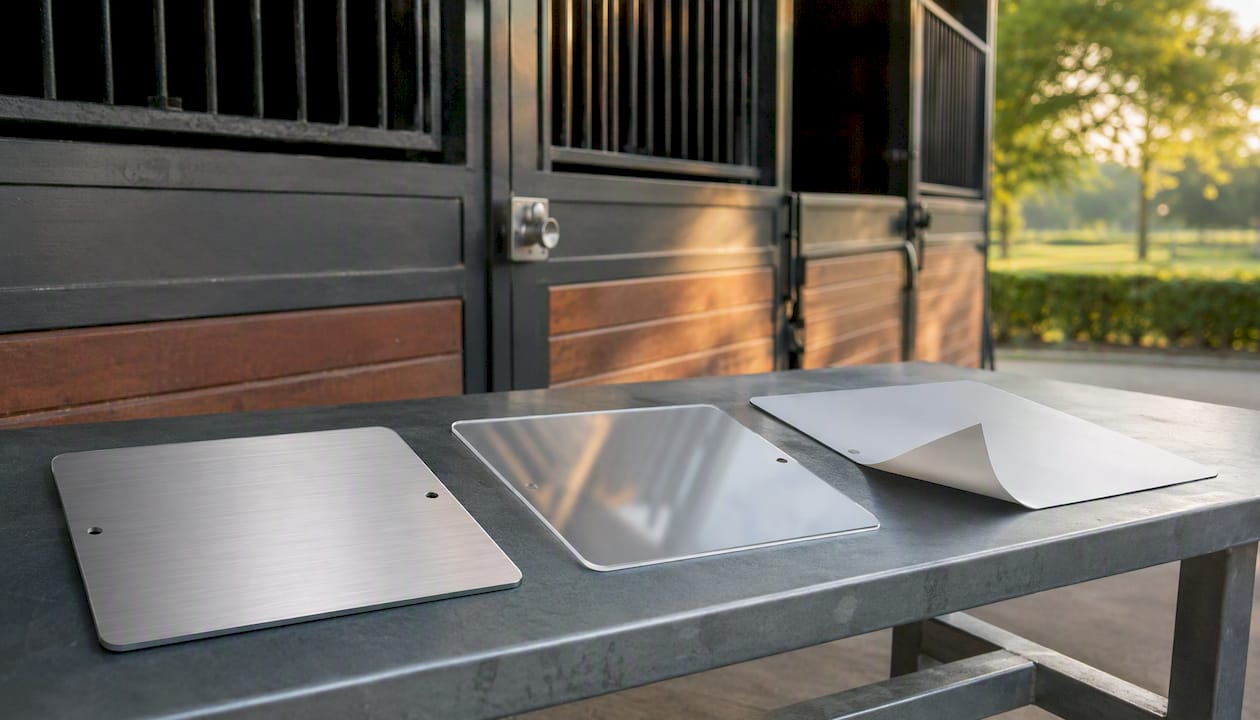
Engraved metal plates hold up best against scratching and weather, and they're the standard choice for anything meant to last years. UV stable plastics are lighter and cheaper, useful where you expect to rotate horses through a stall often. Laminated decals sit at the budget end and work fine for shorter-term signage, provided you accept they'll need replacing sooner.
For mounting, peel-and-stick adhesive suits plates you'll swap out as horses change stalls. Screws or brackets suit permanent installations where the plate stays put for years. If you're using adhesive on masonry or painted timber, choose a stable-safe adhesive rated for outdoor use so it doesn't peel in humidity.
When ordering, ask for:
- UV protection so printed ink or engraving doesn't fade within a season
- Waterproofing rated for hose-downs and rain exposure
- Abrasion resistance for a surface horses and equipment will knock against
- Temperature tolerance across both summer heat and winter frost
Ready-made equine QR stable mounts are worth buying outright when you want a proven, weatherproof product without designing your own. Custom printing makes sense when you need matching branding across a large yard or want to control the exact profile fields shown.
Pro Tip: Order one plate first and leave it outside for a fortnight before committing to a full batch. Cheap laminate that looked fine in the office often clouds over or peels within days of real weather.
How big should a QR code be on a stall door?
Size is the single most common mistake yards make with QR stall signs, and it's an easy one to avoid once you know the numbers.
- Close range (arm's length). A minimum of 25 to 30 mm, roughly an inch, will scan fine when someone is standing right at the door.
- Eye-level stall plates viewed from a metre or two back. Go bigger, 40 to 60 mm, so the code stays scannable without someone needing to lean in.
- Contrast and framing. Use a dark code on a light background, keep a clear white margin (the "quiet zone") around the code, and avoid printing logos or decoration over or near it.
- CTA phrasing. A short line like "Scan for care notes" or "Scan for vet and emergency contacts" tells people exactly what they'll get, and adding that context measurably improves scan rates.
For screens or plates viewed from several metres away, sizing guides suggest a much larger minimum, closer to 100 mm square, scaled to viewing distance. Stall doors sit closer to that close-range end, but if your aisle is wide or lighting is poor, size up rather than down.
Before you commit to a full print run, test the plate on two or three different phone models in the actual stable at the time of day people will be scanning it. Morning glare through an open barn door can wash out a code that scanned perfectly on your desk.
How do you set up QR stall signs without adding admin?
Getting from idea to working sign takes five steps, and none of them require ongoing effort once you've done the setup.
- Generate a dynamic QR code, not a static one. A dynamic code separates the printed square from the destination link, so you edit the page behind it whenever something changes.
- Build the horse's profile page with the fields that actually matter in a hurry: emergency contacts, current medication, feed schedule, turnout and rug guidance, last farrier, dentist and vaccination dates, and any behavioural notes a stranger should know.
- Print and mount the plate at eye level on the stall door, using a weatherproof material suited to your climate.
- Assign roles. Decide who can edit (usually the yard manager or a designated admin) versus who can only view, and keep a simple log of edits so changes are traceable.
- Run weekly and monthly checks. Scan-test each plate once a week; confirm emergency numbers are current at least monthly; and set a cleaning schedule so grime doesn't obscure the code.
The daily workload here is close to zero. Once a horse's profile is built, updating a feed amount or a vet's number takes thirty seconds, and the plate on the door never needs touching.
- Minimum profile fields: emergency contacts, medication, feed schedule, turnout/rug notes, farrier/dentist/vaccination dates, behavioural flags
- Weekly: scan test each plate
- Monthly: verify emergency contact numbers
- Ongoing: log who edited what and when
How do you keep stall signs accurate and private?
Accuracy decays fast if nobody owns the update process. Nominate one person, usually the yard manager, as the plate's editor of record, and set a clear cadence: review every profile monthly, and update immediately after any change to medication, feed or emergency contacts.
Privacy needs a deliberate line. Public-facing pages should carry only what a stranger genuinely needs in an emergency: a tap-to-call number and a brief care summary. Full owner contact details, home addresses and billing information belong behind a password-protected or tokenised link, not on a page anyone can reach by scanning a code in a public aisle.
- Public page: emergency tap-to-call number, care summary, key medical flags
- Restricted access: owner's personal details, billing information, full veterinary history
- Physical upkeep: wipe plates weekly, check for cracking or fading each season, replace faded plates before they become unreadable
Pro Tip: Do a seasonal walk of every stall door with your phone. It's the fastest way to catch a plate that's cracked, faded, or scanning to a dead link before an owner or vet finds out the hard way.
What do most yards get wrong about QR stall signs?
Most advice on QR signage treats it like a marketing tool, something for menus or promotions, and misses what makes a stable different: the person scanning is often not the horse's regular carer, and they're scanning under time pressure.
That changes the priorities. A restaurant QR code can afford a slow-loading page with a fancy layout. A stall sign can't. The information that matters, emergency numbers, current medication, feed instructions, needs to load instantly on a patchy barn wifi signal and read clearly on a cracked phone screen in poor light.
The conventional advice to "keep it simple" is right, but most guides stop at design tips without addressing the operational side: who updates the page, how often, and what happens when a horse changes yards or ownership. A sign is only as good as the person responsible for it, and too many yards skip appointing that person entirely.
If there's one priority to get right first, it's this: decide who owns updates before you print a single plate. Sizing and materials matter, but a beautifully mounted sign linking to a six-month-old medication list is worse than no sign at all.
Where does EquiBETS fit into your QR sign setup?
EquiBETS gives you somewhere sturdy to point every QR code on the yard. Instead of building standalone web pages for each horse, you host the profile, medication history, feed plan and emergency details inside EquiBETS's stable manager, and the plate's dynamic QR always points to the current version, no reprinting, no dead links.

Owner portals mean the horse's owner sees the same information you do, in real time, without a phone call. Emergency plans put critical details in front of a vet or responder the moment they scan. Because everything runs through one platform, you get a log of who changed what, and if you're already tracking feed amounts, the nutrition analysis tools mean the numbers on the sign match what's actually in the feed room.
If you're setting up plates for the first time, start with a free trial and build one horse's profile before printing anything. Check the pricing plan once you're ready to roll it out yard-wide.
Frequently asked questions
Do I need an app to scan a QR code stall sign? No. Most modern smartphone cameras scan QR codes natively, so grooms, vets and owners open the linked profile without downloading anything.
What's the difference between a dynamic and static QR code for stalls? A static code's destination is fixed forever, while a dynamic QR code lets you change the linked page any time. For stalls, where medication and feed details shift, dynamic is the practical choice.
How big should the QR code be on a stall door sign? Roughly 25 to 30 mm for close-range scanning, and 40 to 60 mm if the plate is viewed from a metre or more back in a dim aisle.
Can I restrict who sees the information behind a stall QR code? Yes. Keep emergency contacts and a brief care summary public, and put sensitive owner details behind a password-protected or tokenised link accessible only to authorised staff.
How often should I update the linked horse profile? Review it monthly at minimum, and update immediately after any change to medication, feed plan or emergency contacts.
Sources
QR sizing and dynamic-code guidance comes from SpeedPro's signage best practices and The QR Code Generator's digital signage guide. For example stable plates, see Equine QR and Hello Horse.
- Best Practices for QR Code Signage - Engage Customers and Boost Marketing | SpeedPro
- Create digital signage QR codes that drive instant action
- QR Code Stable Mount - Horse Safety Emergency ID - EQUINE QR