
An equine nutrition analysis compares your horse's actual nutrient intake against its physiological requirements and flags every mismatch, from a marginal lysine shortfall to a dangerously skewed calcium to phosphorus ratio. The output typically covers digestible energy, crude protein and amino acid quality, fibre fractions, starch and sugar, and the full mineral and vitamin spectrum, measured against what the horse's daily requirements actually are for its age, workload and reproductive status.
Run one properly and you get specific, usable answers. Is this horse getting enough lysine to build topline, or just enough crude protein to look fine on paper? Is the hay's non-structural carbohydrate content safe for a horse with insulin dysregulation? Is the mineral balance going to cause developmental problems in a growing youngster?
What you can expect from a completed analysis:
- A breakdown of energy, protein, fibre, starch/sugar, and mineral supply versus requirement
- Specific deficiencies or excesses, often ranked by risk
- Suggested ration edits, whether that's a forage swap, a balancer, or a targeted supplement
- A rechecking timeline based on what changed in the ration
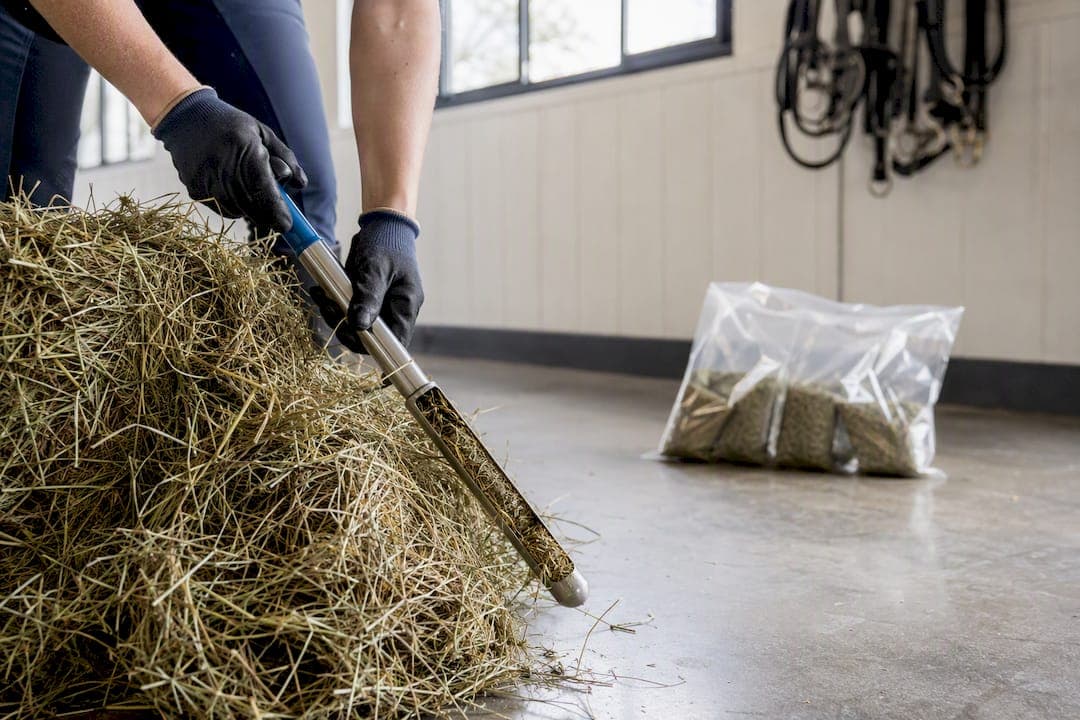
The single best first move is to pull a proper forage sample using a hay corer rather than guessing from a feed bag label, then run it through a calculator or book a consult with a qualified nutritionist. Forage usually makes up 70% or more of a horse's diet by weight, so any analysis built on assumed hay values instead of tested ones is working from a guess dressed up as data.
Key Takeaways
Effective equine nutrition analysis pairs laboratory-tested forage values with a proper calculator or nutritionist review, then turns the results into staged, monitored ration changes rather than a one-off fix.
| Point | Details |
|---|---|
| Test forage, don't assume it | Use a hay corer and roughly 20 cores per lot rather than relying on database average values. |
| Know your key metrics | Track digestible energy, lysine quality, NDF/ADF, starch/WSC, and a calcium to phosphorus ratio near 1.2 to 2:1. |
| Prioritise by risk | Fix starch/sugar issues in metabolic horses and mineral ratios in growing horses before minor gaps. |
| Recheck after any change | Retest whenever hay source, workload, or reproductive status shifts, not on a fixed calendar alone. |
| Manage nutrition centrally | Platforms like Equibets let yards upload lab results and distribute feeding plans across staff for consistent follow-through. |
Table of Contents
- What is equine nutrition analysis measuring, exactly?
- How do you sample forage and test it in a lab?
- How do nutrition calculators turn numbers into a diet plan?
- How do you interpret results and adjust the ration safely?
- When should you test and how often should you recheck?
- What does an equine nutrition analysis actually cost?
- What mistakes undermine a nutrition analysis?
- How does water quality affect nutrition analysis?
- How do environment and management style change nutrient needs?
- What changes when yards manage nutrition digitally?
- Turn analysis into action with an integrated nutrition tool
- Frequently asked questions
- Sources
What is equine nutrition analysis measuring, exactly?
Every credible analysis works from the same core metrics, even if the software or lab presentation looks different. Understanding what each one measures, and why it matters, is what separates a useful report from a spreadsheet you nod at and ignore.
Digestible energy (DE), measured in megacalories per kilogram, tells you how much usable fuel a feed provides. It's the figure that should track directly with workload. A horse in light hacking work needs far less DE than one in full eventing training, and feeding a performance-level DE to a paddock ornament is how you end up with a fizzy, overweight horse rather than a fitter one.
Crude protein (CP) gets quoted constantly, but the number that actually matters more is amino acid quality, particularly lysine. Two feeds can carry identical CP percentages and produce very different topline and hoof quality because one supplies more of the essential amino acids a horse can't manufacture itself. Kentucky Equine Research's analysis of feed test interpretation treats these more granular figures, not just headline protein, as the ones worth acting on.
Fibre shows up as two figures worth knowing apart:
- NDF (neutral detergent fibre) estimates total structural fibre and predicts how much a horse can physically eat, since high-NDF forage fills the gut faster and limits intake
- ADF (acid detergent fibre) measures the least digestible fibre fraction and correlates inversely with energy availability, so high ADF generally means lower usable energy
Starch and sugar analysis, usually reported as starch plus water-soluble carbohydrates (WSC) or ethanol-soluble carbohydrates (ESC), matters most for metabolic horses. A hay testing at 18% combined starch and WSC is a genuine problem for a horse with insulin dysregulation or a laminitis history, even though the same hay would be unremarkable for a fit, insulin-normal horse in hard work.
Minerals round out the picture, and one ratio comes up more than any other. Kentucky Equine Research points to a calcium to phosphorus ratio of roughly 1.2 to 2:1 as the target range, and notes that simple grain-based rations routinely get this backwards, delivering more phosphorus than calcium, which over time undermines bone development in young horses.
How do you sample forage and test it in a lab?
Forage testing is the step most owners skip, and it's the one that makes or breaks the entire analysis. A calculator fed with textbook average hay values instead of your actual hay's numbers is producing a plausible-looking result built on a guess.
Regional and seasonal variation in hay is larger than most owners assume. A first-cut paddock hay from a wet spring can carry a completely different sugar profile than the same paddock's third cut in a dry autumn, and hay grown two properties over can differ enough in mineral content to shift a ration calculation meaningfully.
Here's the sampling protocol that produces a result worth trusting:
- Use a hay corer, not a handful pulled from a bale. Grabbing loose leaves biases the sample towards whatever's easiest to reach, not what the horse actually eats.
- Sample from roughly 20 cores across the lot, drawn from different bales, to capture genuine variation rather than one unrepresentative bale. Rutgers' forage analysis guidance treats this multi-core approach as essential for pregnant, lactating, or growing horses in particular, where the margin for error is smallest.
- Mix the cores thoroughly and take a single representative subsample for submission, rather than sending twenty small individual samples.
- Request DM, CP, ADF, NDF, starch, ESC/WSC, calcium, phosphorus, and key trace minerals as a minimum panel. A basic package covers most of this; add trace mineral analysis separately if your baseline package excludes it.
On method: NIRS (near-infrared spectroscopy) is fast and comparatively cheap, and for standard grass or lucerne hay within a lab's calibration range it's genuinely reliable. Its accuracy drops for unusual forages or imported hay outside the calibration set, where wet chemistry using detergent fibre methods is the safer, more defensible choice even though it costs more and takes longer to turn around.
Pro Tip: If your hay source changes even slightly, whether that's a new supplier, a different paddock, or simply the next cutting, treat it as a new sample. Don't assume last season's results still apply.
How do nutrition calculators turn numbers into a diet plan?
The workflow behind most equine nutrition software follows the same basic sequence. You build a horse profile covering age, weight, workload and reproductive status, enter every feed and forage in the ration along with their tested or database nutrient values, and the calculator compares total supply against that horse's calculated requirement.
Tools like MicroSteed, used by advisors and feed manufacturers, generate a visual comparison of requirement versus current ration and can suggest specific ration adjustments to close any gaps. That's the standard professional approach, and it's exactly the model behind most modern equine nutrition analysis tools available to individual owners and yards today.
The output is only as good as three inputs:
- Realistic intake figures. Guessing that a horse eats "about a flake" of hay twice a day, without weighing it, is the single most common source of a wildly inaccurate result.
- Correct physiological status. A broodmare's requirements shift dramatically between early gestation, late gestation, and lactation, and a profile that isn't updated through those stages will misjudge the ration at exactly the point it matters most.
- Lab-tested forage values, not database defaults. Every calculator ships with average values for common feeds, and those averages are a reasonable starting point, nothing more.
Uploading actual laboratory results for your hay, rather than relying on generic database averages, materially improves the accuracy of any calculated ration, and a diet should be reassessed whenever pasture, hay type, workload or reproductive status changes.
That's not a minor technical footnote. Two horses on paper-identical rations can have meaningfully different actual nutrient intake purely because one owner used database hay values and the other tested their actual bale.
Software has real limits, though. A calculator can flag that a horse's sugar intake looks high or its calcium to phosphorus ratio is inverted, but it can't diagnose why a horse isn't responding to a seemingly correct ration. Cases involving metabolic disease, unexplained poor reproductive performance, or complex multi-horse yards juggling different workloads and life stages are where a qualified equine nutritionist or veterinarian needs to be involved directly, reading the calculator's output alongside bloodwork, body condition trends, and clinical history that no spreadsheet can see.
How do you interpret results and adjust the ration safely?
A finished analysis report is only useful once you've triaged it. Not every flagged issue carries equal weight, and treating a minor vitamin E shortfall with the same urgency as a dangerously inverted calcium to phosphorus ratio wastes both time and money.
Here's a practical sequence for acting on results:
- Rank issues by risk, not by how many are flagged. A horse with insulin dysregulation and a hay testing above 12% combined starch and sugar needs that addressed before anything else on the list. A growing youngster with an inverted calcium to phosphorus ratio sits at similar urgency, since skeletal development doesn't pause while you deliberate.
- Match the fix to the size of the problem. A modest protein or trace mineral gap often just needs a ration balancer added to the existing forage base. A significant energy deficit in a hard-working horse might need a genuine concentrate change. Don't reach for a full commercial feed overhaul when a targeted mineral supplement would close the gap just as well, more cheaply, and with less disruption to a horse's gut.
- Dose conservatively and document everything. Record body weight (measured, not guessed, with a weighbridge or weight tape), body condition score, and behavioural changes before and after any adjustment. Introduce new feeds gradually over 7 to 10 days.
- Set a recheck date tied to the change you made, not an arbitrary calendar reminder. A forage swap warrants a recheck once the new hay is established in the diet, typically 4 to 6 weeks out.
Two scenarios show how this plays out in practice.
Scenario one: a 14-year-old Warmblood in light dressage work comes back from analysis with adequate energy and protein but a calcium to phosphorus ratio around 1:1.4, meaning phosphorus outweighs calcium. The fix here isn't a diet overhaul. It's adding a calcium source, often via a ration balancer, and rechecking the ratio against the target range of roughly 1.2 to 2:1 once the change beds in.
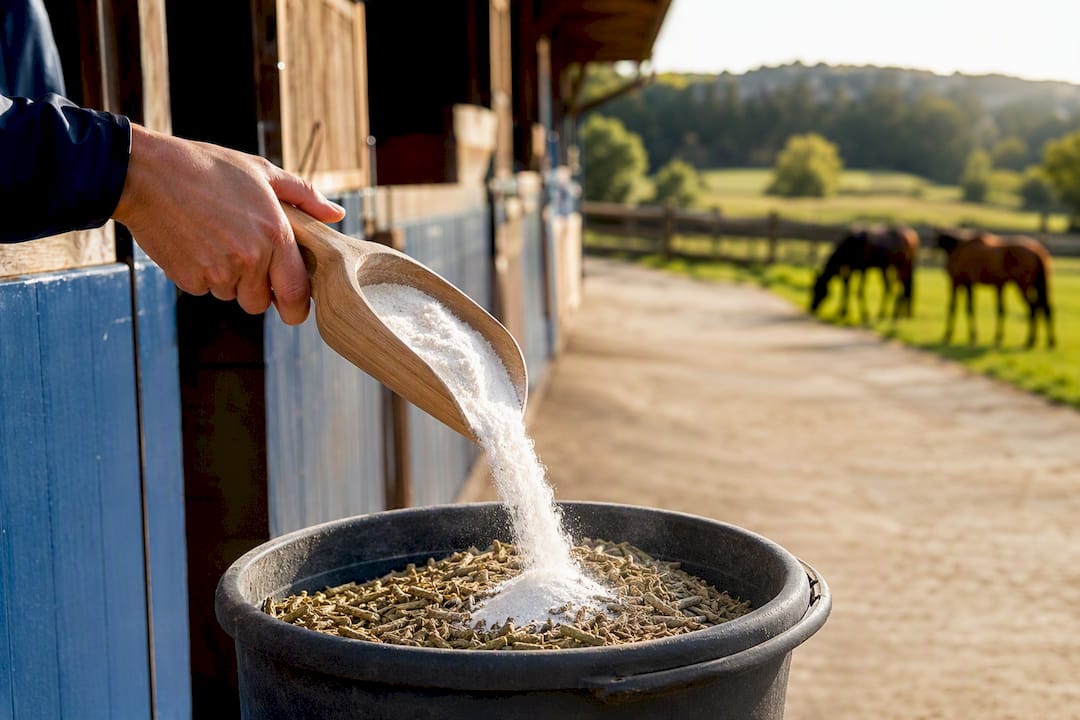
Scenario two: a 9-year-old pony with a laminitis history tests at 16% combined starch and WSC in its pasture hay, well above the safe threshold for a metabolic horse. This is a high-priority fix. It usually means sourcing a lower-sugar hay, soaking the current hay to reduce soluble carbohydrate content, and eliminating any cereal-based feed entirely, then rechecking body condition and, ideally, insulin response within weeks rather than months.
Pro Tip: Change one major variable at a time. If you swap the hay and add a new supplement in the same week, you won't know which change actually caused the improvement, or the problem, when you recheck.
When should you test and how often should you recheck?
Nutrition isn't a set-and-forget exercise, and the right testing cadence depends on both routine maintenance and specific triggers that demand an immediate re-analysis.
For routine monitoring, most professional yards work to a rhythm like this:
- A full forage analysis at least annually, more often if you buy hay from multiple sources through the year
- A fresh test whenever you switch to a new hay lot or supplier, since even a "same variety" hay from a different cutting can differ substantially
- A seasonal check for horses on pasture, since spring grass sugar spikes are a genuine risk period for metabolic horses
Certain situations override the routine schedule entirely and call for immediate re-testing:
- A laminitis episode, which demands an urgent review of starch and sugar intake before the horse returns to any pasture or hay source
- Sudden, unexplained weight change in either direction
- The onset of pregnancy or a shift into lactation, both of which change nutrient requirements substantially and quickly
- A significant change in workload, whether that's stepping up into competition prep or stepping down after an injury
Once you've made a ration adjustment, don't expect instant results. Body condition changes typically become visible over 4 to 6 weeks, while metabolic markers like insulin response can shift faster, sometimes within 2 to 3 weeks of removing a high-sugar feed source, though bloodwork confirmation is the only way to know for certain rather than guessing from appearance alone.
What does an equine nutrition analysis actually cost?
Budget is a real factor, and it's worth knowing where the money goes before you commit to a testing programme.
A basic forage analysis, usually covering DM, CP, ADF, NDF and a handful of core minerals, tends to sit at the lower end of the cost spectrum with a turnaround of a few business days to around two weeks. Adding starch, ESC/WSC, and an expanded trace mineral panel pushes the price up but gives you the detail metabolic and performance horses genuinely need. Detergent fibre and wet chemistry methods generally cost more than NIRS but deliver more reliable numbers for anything outside standard grass or lucerne hay.
Beyond the lab fee, a full professional nutrition consult, where a qualified nutritionist reviews your forage results alongside the whole ration and the horse's history, sits at a meaningfully higher price point than the test alone, but it's the step that turns raw numbers into a specific, actionable plan. Nutrition software subscriptions vary widely depending on whether you're an individual owner managing a handful of horses or a yard managing dozens.
The return on investment case is straightforward once you run the numbers. Over-supplementing "just in case" wastes money on redundant minerals and vitamins a horse's diet already supplies in adequate amounts. A single case of diet-related laminitis or a prolonged unexplained performance issue easily costs more in veterinary bills and lost training time than several years of routine forage testing combined.
What mistakes undermine a nutrition analysis?
Two errors show up again and again, and both are entirely avoidable.
The first is relying on published average feed values instead of testing your actual forage. Database averages exist because they're better than nothing, not because they're accurate for your specific hay. A textbook average masks the exact regional and seasonal variation that makes testing worthwhile in the first place, and a horse fed against assumed values rather than tested ones is essentially being managed on a best guess.
The second is over-supplementing instead of fixing the base ration. It's tempting to throw a multivitamin or a mineral supplement at a vague sense that "something's off," but stacking supplements on top of an untested forage base, rather than adjusting the forage or concentrate itself, often just adds cost without solving the underlying imbalance. The more useful principle here is giving a horse as much supplementation as necessary and as little as possible, correcting the base ration first and layering in targeted extras only where a real, tested gap remains.
Some situations go beyond a ration adjustment and need a veterinarian involved immediately, not after the next scheduled recheck:
- Acute laminitis signs, including a bounding digital pulse, reluctance to move, or a rocked-back stance
- Rapid, unexplained weight loss over days rather than weeks
- Signs of colic, including repeated pawing, rolling, or lack of gut sounds
A nutrition calculator can flag risk factors that contribute to these conditions. It can't replace a veterinary examination once clinical signs appear.
How does water quality affect nutrition analysis?
Water intake gets left out of most nutrition conversations entirely, which is a genuine gap, because it shapes how the rest of the diet performs. A horse drinking too little water eats less overall, which throws off every intake assumption a calculator relies on, and it also increases impaction colic risk regardless of how well-balanced the ration on paper looks.
Water quality itself matters beyond simple availability. High mineral content in bore or dam water, particularly elevated sulphate, iron, or sodium, can suppress voluntary water intake because horses are genuinely picky about taste and smell, and it can also interact with the mineral balance you've carefully calculated from feed alone. A horse getting meaningful sodium from its water supply needs less salt supplementation than the standard recommendation assumes, and skipping that adjustment risks oversupplying an electrolyte that's already adequately covered.
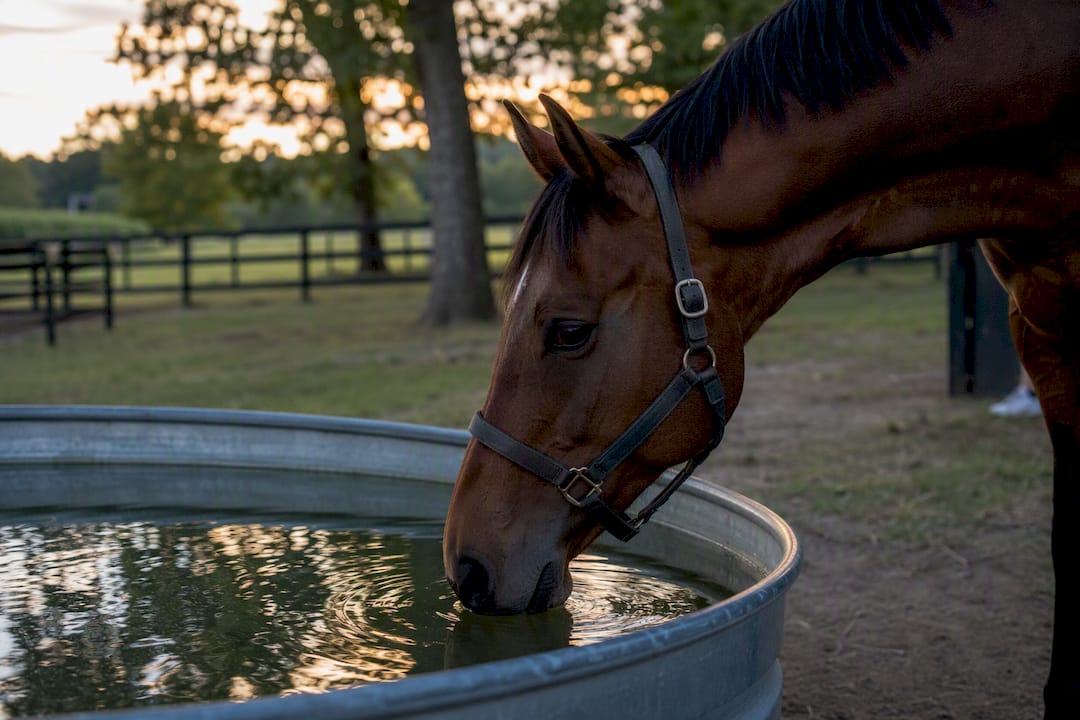
Seasonal temperature swings compound this further. A horse in hot, humid conditions can need water intake several times higher than the same horse in cool weather, and if intake drops because the water is warm, algae affected, or simply unpalatable, dry matter intake usually drops with it. That undermines the very nutrient supply figures your analysis is built on.
If you're running a full nutrition analysis and haven't tested your water source in the last year or two, particularly for bore or dam water, it's worth doing alongside your next forage test rather than treating water as a given.
How do environment and management style change nutrient needs?
The same horse, fed the same base ration, can have genuinely different nutrient requirements depending on how it's kept, and this is where a lot of "the numbers don't match reality" confusion comes from.
Climate is the most obvious variable. Horses in consistently cold conditions burn more energy simply maintaining core body temperature, particularly if they're clipped or have limited shelter, which pushes digestible energy requirements up independent of any workload change. Horses in hot, humid climates lose more electrolytes through sweat and need that accounted for separately from the base mineral ration.
Turnout regime matters just as much. A horse on unlimited pasture access is getting a substantial, variable proportion of its diet from grass that almost never gets tested, while a horse on a dry lot with hay as its sole forage source has a diet that's far easier to quantify precisely, because you control every gram of it.
Stocking density and yard management style shift things too. Horses turned out in larger groups with more competition for resources may have less consistent intake than a horse fed individually, and horses on properties with poor pasture management may be getting far less nutritional value from "grazing" than the paddock's green appearance suggests. None of this shows up in a calculator unless you actively account for it when building the horse's profile, which is exactly why the same textbook ration can perform completely differently on two properties two suburbs apart.
What changes when yards manage nutrition digitally?
Running nutrition analysis for one horse is straightforward. Running it consistently across a yard of twenty, with different staff on different shifts, is where things fall apart in practice, not in theory.
The biggest operational win from integrating nutrition analysis into a broader yard management system isn't the analysis itself. It's what happens after. A feeding plan sitting in a paper folder in the office gets misread, forgotten, or quietly altered by whoever's on evening feed duty. A plan that every staff member can pull up on their phone, with exact quantities and any recent adjustment flagged, gets followed. That consistency is what actually protects the horse, not the sophistication of the original calculation.
Centralised digital records also make rechecking painless rather than a chore someone keeps putting off. When forage results, body condition scores, and feeding history sit in one place instead of scattered across notebooks and someone's memory, spotting a trend, or a horse quietly sliding off track, becomes a five-minute job instead of a guessing exercise. Integrated platforms that combine nutrition data with day-to-day yard operations have been shown to meaningfully improve how consistently staff actually follow the plan, which is ultimately the part that determines whether good analysis translates into a genuinely healthier horse.
Turn analysis into action with an integrated nutrition tool
Every workflow described above, forage testing, calculator input, ration adjustment, staff distribution, works better when it isn't scattered across a lab report, a spreadsheet, and a whiteboard in the feed room. That's the specific gap Equibets is built to close for professional yards.

The equine nutrition analysis module lets you upload actual forage lab results rather than working from database averages, generates AI-assisted ration comparisons, and pushes the resulting feeding plan straight to every staff member's phone, with offline access for yards where reception drops out in the barn. That solves the exact consistency problem covered above: a plan that lives in one central system gets followed the same way every shift, instead of drifting the moment it's copied by hand onto a new whiteboard.
Combined with the stable manager tools for team coordination and record keeping, rechecking a ration after a hay change or a new pregnancy stage becomes a five-minute update rather than a re-briefing of the entire team. If you're managing nutrition for more than a handful of horses, check the pricing page and start a trial to see whether it fits your yard's routine.
Frequently asked questions
What is included in a standard equine nutrition analysis? A standard analysis reports digestible energy, crude protein, fibre fractions (NDF and ADF), starch and sugar levels, and key macrominerals and trace elements, compared against your horse's specific requirement based on age, weight, workload and reproductive status.
How much forage do I need to sample for testing? Take roughly 20 core samples across the hay lot using a hay corer, mix them thoroughly, and submit one representative subsample rather than a handful pulled by hand from a single bale.
Is NIRS accurate enough for horse feed analysis? NIRS works well for standard grass and lucerne hay within a lab's calibration range, but accuracy drops for unusual forages or imported hay, where detergent fibre or wet chemistry analysis is the more reliable choice.
How often should I retest my horse's diet? Test forage at least annually, whenever you change hay source, and immediately after a laminitis episode, sudden weight change, or a shift into pregnancy, lactation, or a significantly different workload.
Can nutrition calculators replace a veterinarian or equine nutritionist? No. Calculators are strong at comparing intake against requirement, but metabolic disease, poor reproductive performance, and complex multi-horse yards need a qualified professional interpreting the results alongside clinical history.
Why does my horse's calcium to phosphorus ratio matter so much? An inverted or poorly balanced ratio, common in simple grain-based rations, undermines bone development in growing horses. Kentucky Equine Research recommends targeting roughly 1.2 to 2:1 in favour of calcium.
Sources
Readers wanting to go deeper into the science behind forage testing and feed interpretation have a few genuinely reliable places to start.
- FeedXL - Horse Nutrition Calculator
- FS714: Analysis of Feeds and Forages for Horses (Rutgers NJAES)
- Understanding horse feed analysis results: a primer - Kentucky Equine Research